
Heat treatment for bedbugs
Heat treatment kills insects with controlled heat rather than chemistry. The temperature in the room, or inside a heat chamber, is raised to around 60 C and held until every stage of development dies, eggs included.
How it works
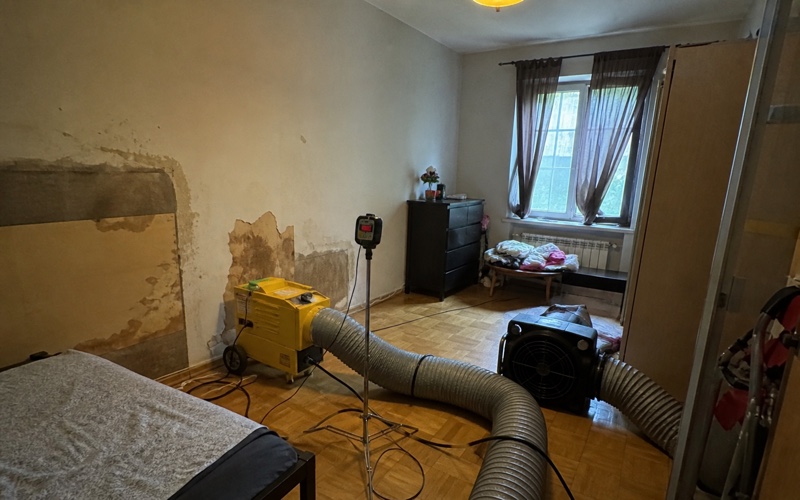
Using specialist equipment, the air in the room is heated gradually. The temperature is monitored by sensors at several points so the heat reaches the gaps, the inside of the mattress and the joints in furniture — the places insects actually hide, rather than just the open air in the middle of the room.
Bedbugs and their eggs die from sustained exposure above roughly 50 C. In practice we hold around 60 C to leave a margin, so the heat reliably reaches even the deepest harbourage.
The main advantage: eggs
The weak point of chemical products is bedbug eggs. The shell is tough and most insecticides cannot penetrate it. That is why chemical treatment relies on residual action: the product stays active on surfaces and kills the nymphs once they hatch.
Heat bypasses that problem entirely, because the eggs die immediately. This is why heat treatment often resolves the problem in a single visit, without the second treatment two weeks later.
How the visit runs
- 1
Preparation.
Heat-sensitive items are removed. Furniture and textiles stay — treating them is the point.
- 2
Setting up.
Heaters and air circulation fans are positioned so the heat reaches gaps and the inside of furniture.
- 3
Sensors.
Temperature sensors go in several places, including the hardest spots for heat to reach: inside the mattress, behind furniture, near skirting boards.
- 4
Heating up.
The temperature is raised gradually to around 60 C. Going gradually matters: heated too fast, insects escape deeper into the structure.
- 5
Holding.
The temperature is held and monitored so the heat evens out across the whole space.
- 6
Cooling and check.
Once cooled, the room is immediately usable.
The whole job usually takes 4 to 8 hours depending on the size and insulation of the space — considerably longer than a chemical treatment, and that has to be planned for.
What to take out first
Around 60 C is a temperature most household items tolerate, but there are exceptions that must come out.
- Candles, wax items, decorative soaps.
- Cosmetics, aerosol cans, deodorants, hairspray.
- Medicines, supplements, vitamins.
- Vinyl records, magnetic tape, photographic film.
- Electronics with batteries: laptops, phones, power banks.
- Flammable liquids, paints, solvents.
- Chocolate and anything else that melts.
- Musical instruments with glued timber joints.
- House plants.
We tailor the list to the room and go through it before the work. If something is in doubt, it is safer to take it out.
When to choose heat, and what to weigh up
- Children, pets or allergies. Where chemistry is unwelcome in the home.
- Speed matters. A hotel room, a rental flat between tenants, a care home.
- Single items. A mattress, a sofa, luggage, clothing, furs — treated in the heat chamber rather than thrown away.
- Resistance. Where bedbugs have already survived a chemical treatment. Resistance to heat is not possible, because heat acts physically rather than chemically.
The trade-offs are honest ones: heat treatment costs more than a chemical treatment and takes longer on site.
The optimal answer is often a combination: heat for the critical zones and a residual chemical treatment around the perimeter, to stop reinfestation from neighbouring flats.
Heat or chemical: how to choose
Both methods work. They fail in different circumstances, which is what should decide between them.
| Heat treatment | Chemical treatment | |
|---|---|---|
| Kills eggs | Yes, immediately | No, relies on residual action |
| Usual number of visits | Often one | Usually two, 10-14 days apart |
| Time on site | 4-8 hours | 1-2 hours |
| Residues | None | Residual film for 4-6 weeks |
| Room usable again | Once cooled | After 2-4 hours and airing |
| Protects against reinfestation | No | Yes, for several weeks |
| Resistance possible | No | Yes, with repeated use of one substance |
| Cost | Higher | Lower |
The one row that decides most cases is the last but one: heat leaves nothing behind, which is an advantage in a home with children and a disadvantage in a flat where insects keep arriving from next door. That is why the two are often combined.
When heat treatment is not the answer
We would rather turn a job down than sell the wrong method.
- Where the source is outside the property. Heat clears the flat completely, but leaves no barrier, so if bedbugs keep arriving from a neighbouring flat they simply walk back in. There the answer is heat plus a residual perimeter treatment.
- Where the space cannot hold heat. Poorly insulated buildings, very large volumes and spaces with unavoidable ventilation lose heat faster than the equipment can supply it, and a treatment that never reaches temperature in the cold corners is a treatment that failed.
- Where the contents cannot tolerate it. Rooms full of items that must not be removed and must not be heated.
- For pests other than bedbugs. Heat is outstanding against bedbugs and useful for textiles and stored-product pests in individual items. It is not the right tool for a cockroach colony living inside a building’s structure, or for anything you cannot enclose.
Book a pest control visit
Fill in the form — we reply within 5 minutes. We work weekends and handle urgent callouts.