
What to do after the treatment
What you do after the treatment affects the outcome as much as the treatment itself. The most common reason insects come back is not a poor job — it is the residual layer being washed off a couple of days later.
How long to stay out
| Method | Stay out | Notes |
|---|---|---|
| Chemical treatment | 2-4 hours | Air the rooms for 30-60 min on return |
| Gel baits | Not needed | You can stay in the flat while we work |
| Heat treatment | Duration of the work | Usable as soon as the rooms cool |
| ULV fogging | 2-4 hours | Until aired and the droplets have settled |
We give you the exact figure for your case before we start. If there are small children, a pregnant woman or someone with a respiratory condition in the home, we plan a longer period as a matter of course.
Airing the rooms
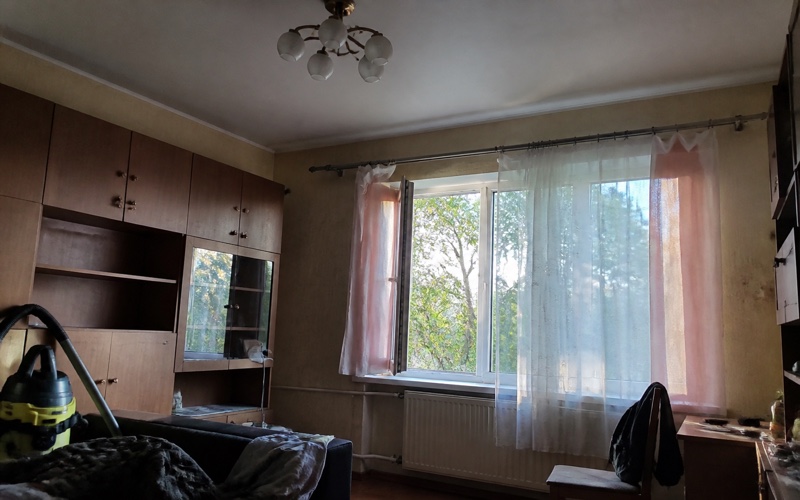
When you come back, open the windows and air the flat for 30-60 minutes. A cross-draught, with windows open on opposite sides of the property, clears the air far faster than one window on its own.
If you can still smell something, air it for longer. Modern microencapsulated products have a weak odour that is essentially gone after proper ventilation, so a lingering strong smell is worth mentioning to us rather than tolerating.
In winter this is less pleasant but no less necessary. Twenty minutes of a proper cross-draught with the heating off does more than three hours of one window on the latch.
What you may and may not wash
The main rule: do not wash the treated areas for 2-4 weeks. The residual layer is what kills the insects hatching from eggs after the treatment. Wash it off and the treatment loses its effect, and the colony rebuilds itself.
- You may and should wipe: kitchen worktops, the dining table, surfaces a child can reach, sanitary ware, dishes and anywhere food is handled. These are meant to be wiped down after the treatment.
- Do not wash for 2-4 weeks: skirting boards, gaps along the walls, the areas behind and under furniture, pipe runs, and the insides of any cupboards we treated.
The middle of the floor can be washed as normal — the treatment concentrates on the edges and the gaps, not on the open floor where nothing hides.
What to expect over the coming weeks
- The first days. You may see more insects than before. This is normal and it is a good sign — the product drives them out of their harbourages. Do not start spraying anything extra.
- Weeks one and two. Numbers drop sharply. Individual new insects may appear as eggs hatch; they will pick up the residual layer as they move.
- Weeks two to four. Normally the full result. For bedbugs and cockroaches a planned second treatment often falls in this window, and that is part of the plan rather than a sign of failure.
Collect dead insects with a vacuum cleaner or a dry cloth, without washing the treated surfaces.
Dealing with dead insects
For several days after the treatment you may find dead insects in places you never saw them before — in the middle of the floor, on a windowsill, in the bath. That is expected: a dying insect leaves its harbourage and dies in the open.
- Vacuum them up or pick them up with a dry cloth or a piece of paper.
- Do not wet-wash the spot if it is next to a skirting board or in a gap. Dry removal only.
- Empty the vacuum bag into a bin outside the flat.
- Do not panic at the number. Twenty dead cockroaches means twenty fewer live ones, not a treatment that failed.
If you are still finding freshly dead insects after four weeks, that is worth telling us about, because it suggests something is still producing them.
Cleaning is needed, but in the right places and at the right time.
- 1
Straight away, before normal use:
wipe worktops, the table, the sink, door handles and low surfaces a child touches. Plain water and ordinary detergent are fine.
- 2
During the first weeks:
vacuum as usual, wash the middle of the floor as usual, leave the perimeter alone.
- 3
After 4 weeks:
normal cleaning everywhere, including skirting boards and gaps.
If you have a planned second treatment, the residual layer needs to survive until then, so the four-week clock starts from the last visit, not the first.
As for daily life, people often expect the flat to feel like a building site for weeks. It does not. Once you have aired the rooms and wiped the surfaces you touch, everyday life carries on as usual, with a short list of exceptions.
- Cooking and eating. Normal, once worktops and the table have been wiped. Kitchen treatments are placed into gaps and behind appliances, not over food surfaces.
- Sleeping in a treated bedroom. Normal after the stated absence period. Put freshly washed bedding on rather than the bedding that was on the bed before.
- Children playing on the floor. Fine once you have wiped the play area. The residual layer sits in gaps and at the perimeter.
- Visitors and deliveries. No restriction at all.
The one habit to keep for a month is leaving the perimeter alone. Everything else is ordinary housekeeping.
The four-to-six-week protected window is also a good moment to close the routes that let the insects in, because doing it later usually means doing it after they are back.
- 1
Seal the pipe runs.
The openings around the risers in the bathroom and kitchen of a Soviet-era block are often wide open, and they are the main route between flats.
- 2
Check the ventilation grilles.
A grille with a fine mesh behind it is a genuine barrier; a missing grille is an open door.
- 3
Fix the drips.
Cockroaches and silverfish depend on water more than on food.
- 4
Deal with what you brought in.
If the problem arrived with luggage or second-hand furniture, the habits that brought it in are worth changing.
Where the source is in a neighbouring flat, none of this eliminates the risk on its own — see pests from neighbours.
When to get in touch again
If insect activity is unchanged after 3-4 weeks, fill in the form and describe the situation. The usual reasons are a source in a neighbour's flat, incomplete preparation, the residual layer washed off early, or a harbourage that was never found.
What helps us most is specifics: when the treatment was done, where exactly you are seeing insects now, and what has changed in the flat since. That is usually enough to tell which of those four it is.
See also why pests come back after treatment.
Book a pest control visit
Fill in the form — we reply within 5 minutes. We work weekends and handle urgent callouts.