
How to prepare your property for pest control
Preparation is not a formality. The result of the treatment depends directly on whether the product reaches the places where the insects actually hide. A cupboard left full or a wardrobe never pulled away from the wall means an untreated zone, and that is where the colony survives.
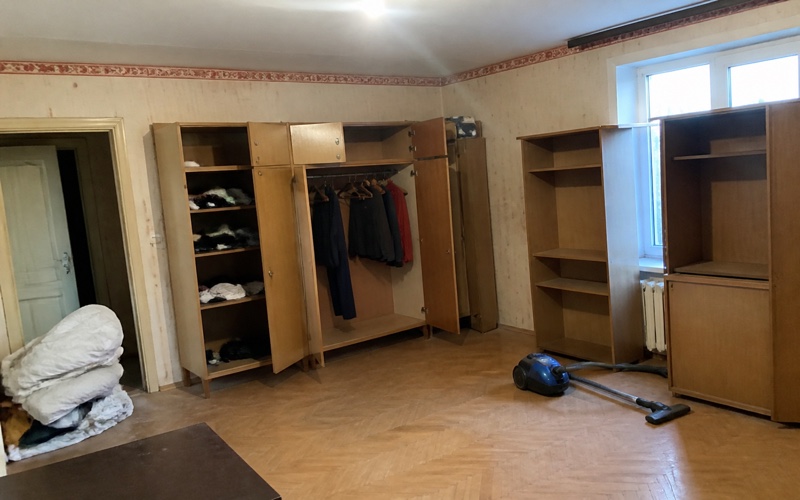
Every room, and the bedroom if it is bedbugs
- Pull furniture away from the walls by at least 10-15 cm so the skirting boards and the lower part of the walls are reachable.
- Vacuum floors thoroughly, including carpets and the seams of upholstered furniture. Put the vacuum bag straight into a bin outside the flat, not in the kitchen bin.
- Clear surfaces of food, dishes, toiletries and cosmetics, or shut them inside closed cupboards.
- Give us access to corners, pipe runs and ventilation openings — in older Riga blocks these are exactly the routes insects use.
- Move houseplants out of the treated rooms if you can.
None of this takes specialist knowledge. It takes an hour or two, and it is the single biggest thing you control.
Bedroom, if the problem is bedbugs.
- Strip all bedding and put it straight into a 60 °C wash. Not into a laundry basket in another room.
- Empty the wardrobe. Wash clothes at 60 °C or send them to dry cleaning. Anything that cannot be washed goes into sealed plastic bags and, after the treatment, into the freezer for several days.
- Pull the bed away from the wall and take the headboard off if that is possible.
- Vacuum the mattress seams, the gaps in the bed frame and the floor around the bed.
- Empty the bedside table drawers.
Important: do not put washed and cleaned clothes back into the wardrobe before the treatment. Keep them in sealed bags until the room has been treated and aired.
Kitchen, if the problem is cockroaches or moths
- Empty the cupboards where you have seen signs. For the rest, follow what we tell you on the day.
- Throw out infested products. Move remaining loose dry goods into airtight containers.
- Pull out the fridge and the cooker if you can — the warm gap behind and under them is the most common harbourage.
- Clear crumbs from cupboard corners and from under the appliances.
- Fix dripping taps and wipe the sink dry. Cockroaches survive far longer without food than without water.
If we use the gel bait method, you do not need to empty the cupboards and you do not need to leave the flat at all. We tell you which method we are using before we start.
If there are children, pets or allergies in the home
- Children's things. Take out toys, cot bedding and personal items, or cover them so they are properly sealed.
- Aquarium. Cover it tightly and switch off the aeration and the external filter for the duration of the treatment — both pull room air into the water.
- Cages. Birds and rodents go out of the property, not just into another room.
- Pet things. Remove bowls, beds and toys.
- Tell us in the enquiry form about allergies, pregnancy, small children or animals. It changes which method we choose, so it is not a detail to mention on the doorstep.
See pest control with pets and pest control with children.
What not to do before the treatment
- Do not spray shop aerosols in the days before the visit. They scatter the colony deeper into the structure and into neighbouring flats, and they make the professional treatment measurably less effective.
- Do not move furniture or belongings into other rooms. That is how a problem confined to one room becomes a problem in the whole flat.
- Do not scrub walls and skirting boards with strong cleaners immediately beforehand.
- Do not throw furniture out before you have spoken to us. In most cases it can be saved.
How long it takes, and things you cannot wash
It is worth planning realistically, because preparation cannot be done in the five minutes before the technician arrives.
| Situation | Roughly | The slow part |
|---|---|---|
| Cockroaches, gel bait | 30-60 min | Clearing surfaces, wiping crumbs |
| Cockroaches, spray treatment | 2-3 h | Emptying cupboards, moving appliances |
| Bedbugs, one-bedroom flat | 3-5 h | Washing textiles at 60 °C |
| Fleas | 2-3 h | Vacuuming carpets and pet bedding |
| Ants, moths, silverfish | 1-2 h | Emptying the affected cupboard |
The washing is what sets the timetable in a bedbug job. A single machine cycle at 60 °C takes a couple of hours, and a two-person household usually has several loads. Start the day before rather than the morning of the visit.
What to have ready when we arrive
Textile treatment is compulsory in bedbug and moth cases, but not everything survives a hot wash. There are three practical routes.
- Tumble dryer. Thirty minutes on high heat kills bedbugs and moth larvae at all stages, including eggs, and many items tolerate the dryer better than a 60 °C wash.
- Freezing. Sealed in a bag, several days at freezer temperature. Suits books, documents, small electronics, soft toys and shoes.
- Heat treatment of the item itself. Suitcases, fur, mattresses and upholstered chairs can go inside a heat tent — see heat treatment.
Whichever route you use, the treated items go into sealed bags and stay there until the room has been done and aired. Putting them straight back is the most common way people reinfest a flat they have just paid to have treated.
Finally, a few practical things on the day itself speed the work up and improve the result.
- 1
Access to the whole flat.
Including the balcony, the storage cupboard and the space behind the kitchen units. Insects do not respect the boundary of the room where you saw them.
- 2
Whatever you have found.
A dead insect in a jar or a photo on your phone settles the identification in seconds.
- 3
The history.
When you first noticed them, what you have already tried, whether the neighbours have the same problem. It genuinely changes the plan.
- 4
Somewhere to be.
After a chemical treatment you need to be out for 2-4 hours, longer with small children, so decide in advance where you will go.
See also what to do after the treatment.
Book a pest control visit
Fill in the form — we reply within 5 minutes. We work weekends and handle urgent callouts.