
Pest control when you have children
In a home with children the principles of the treatment stay the same, but the level of caution goes up. The reason is not greater toxicity — it is how children behave. They spend their time on the floor, touch surfaces and put their hands in their mouths.
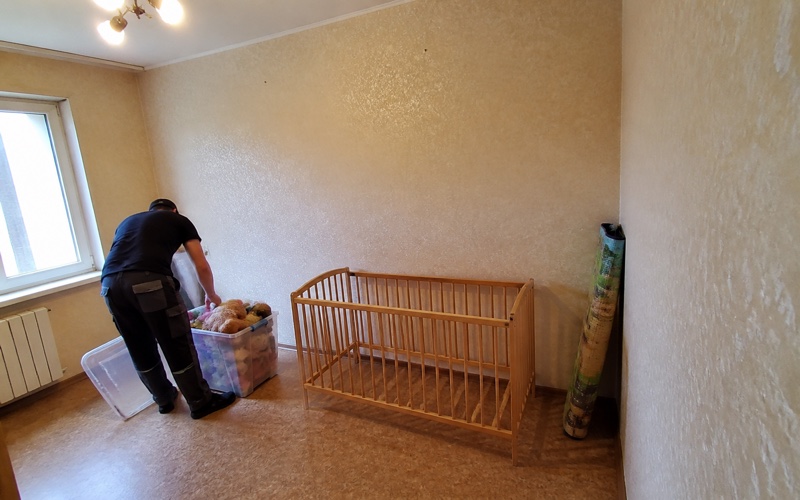
Why caution is higher with children
Children spend most of their time in exactly the zone where the treatment is most concentrated: at floor level, along the skirting boards and under the furniture. They also touch surfaces more and put their hands in their mouths.
On top of that a child's body mass is smaller, so any given contact means proportionally more than it would for an adult.
The practical conclusion is not to skip the treatment. Insects in a child's bedroom are a real problem in their own right, and bedbug bites disrupting a child's sleep every night is not a neutral alternative. The conclusion is to carry out the treatment so that contact is ruled out: a longer absence, more thorough airing, and cleaning every accessible surface before the child comes back.
Preparation
- Take out all the toys, especially soft ones and anything a child puts in their mouth. If they cannot be removed, seal them properly.
- Strip the cot and take out the small mattress, or cover it tightly.
- Remove bottles, dummies, dishes and toiletries.
- Take out or cover rugs and play mats.
- Move pushchairs and car seats out of the rooms being treated.
Sealed means sealed. A toy box with the lid closed is not sealed; a plastic bag tied shut is. The point is that nothing a child handles picks up a deposit.
After the treatment, the compulsory steps
In a home with children we plan a longer absence than standard — usually at least 4 hours — and airing of 60 minutes or more.
Before the child comes back, damp-wipe every surface they can reach: the floor where they play, windowsills, low shelves, table and chair surfaces, door handles. Water and ordinary detergent are enough.
The skirting boards and gaps where the treatment was deliberately placed are not cleaned. A child has no direct contact with them, and that is exactly where the residual layer needs to stay to do its job.
A practical timetable for a family
Treatment day needs planning, because the absence period is longer than usual.
- 1
Morning.
Finish preparation, get the toys and cot bedding out, pack what the family needs for the day.
- 2
Midday, the visit.
A flat treatment typically takes 1-2 hours depending on size and pest.
- 3
Four hours out, minimum.
A day at grandparents' or a long afternoon out is easier than trying to time it to the hour.
- 4
On return, one adult first.
Air the flat, wipe the accessible surfaces, put clean bedding on the cot — then bring the child in.
Booking the treatment for a day when the family is out anyway takes the pressure off the whole thing.
Babies, asthma and pregnancy
For babies, children with asthma or respiratory conditions, and for pregnant women, we suggest considering heat treatment. It uses no chemical products at all, so the questions of residue and airing simply do not arise.
If that is not possible in your particular case, we choose the lowest-toxicity products available and plan the timing so the child is away for longer — for example on a day when the family is visiting relatives.
Say in the enquiry form that there are small children or a pregnancy in the household. It genuinely changes which method we propose, and it is much easier to plan for before the visit than on the doorstep.
What to tell the child
A practical point that gets forgotten: children notice changes in the home and ask about them. Furniture moved, toys packed away, a stranger with equipment, a day out that was not planned.
What works is a plain explanation without drama: someone is coming to get rid of the insects, the toys are packed away so they stay clean, we are going out for the afternoon, and afterwards everything goes back to normal. Framing it as something dangerous tends to produce more anxiety than the situation warrants.
For older children the one instruction that matters is not to poke around behind the skirting boards or under the furniture for a few weeks. That is easier to get across as a rule about the gaps than as a warning about chemicals.
One more thing worth saying out loud to an older child: insects in the home are not a sign that anyone has done anything wrong. Bedbugs travel in luggage and between flats in a block regardless of how clean a home is, and a child who has worked out that something is being hidden from them will usually assume the worst version of it.
Book a pest control visit
Fill in the form — we reply within 5 minutes. We work weekends and handle urgent callouts.