
Pest control in schools and kindergartens
In an educational setting one consideration decides everything: children must not return to the rooms until it is completely safe. That governs both the method and the timing.
When the treatment happens
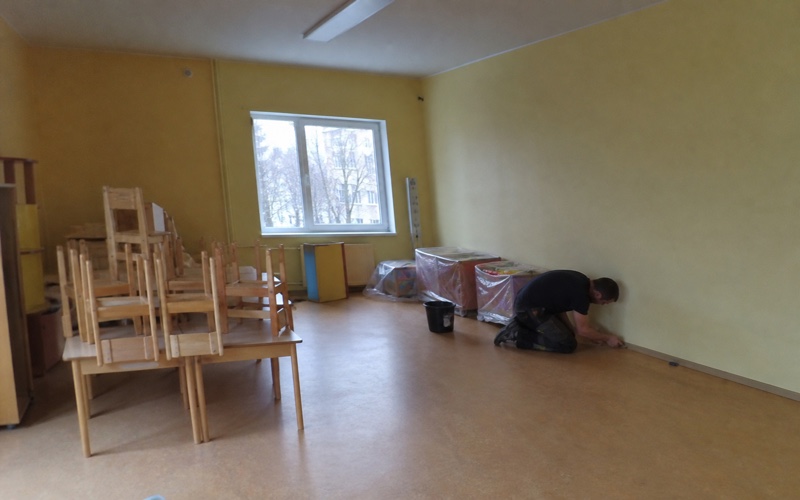
In schools and kindergartens we plan the work for times when no children are present: half-term and holiday periods, weekends, or the summer break. That leaves enough time for airing and for cleaning surfaces before the children come back.
If the situation is acute and cannot wait for a holiday, we treat zone by zone, moving groups into other rooms while each area is done and returned to use.
Choosing the method
The priority is the method with the lowest residue risk. Where possible we use gel bait applied to specific points out of children’s reach — behind equipment, inside cupboards, in plant rooms.
Where a broader treatment is needed, we use low-toxicity products, plan an extended airing period, and wet-clean every surface a child can reach afterwards.
For textiles and soft toys, heat treatment is often the right answer, because it uses no chemicals at all.
Toys and textiles
Before the treatment, all toys, bedding and children’s personal belongings are removed or sealed. After the treatment and airing, every accessible surface is wet-cleaned.
We never skip that step, even when the product used is safe once dry. In a setting where small children put their hands and mouths on everything, the margin has to be wider than the label requires.
Prevention between terms
For educational settings, prevention during the holidays is far easier than reacting in term time, when every treatment means moving groups around.
- Inspect during each holiday, especially kitchens, dining areas and storage.
- Keep food to designated rooms. Snacks in classrooms and staff drawers are the usual starting point.
- Check textiles and soft furnishings in sleeping rooms at the start of each term.
- Seal gaps around pipe runs and ventilation between rooms and floors.
Cost is quoted after a survey. We also advise reading pest control with children in the home, which covers the same safety logic in a domestic setting.
Which pests turn up in educational settings
The species mix here is narrow and predictable.
- Cockroaches. Kitchens, dining areas and the warm zones around catering equipment.
- Ants. Ground-floor rooms in spring, following food kept in classrooms.
- Pantry moths. Kitchen dry stores and forgotten craft supplies containing grains or pasta.
- Silverfish. Damp washrooms and basements.
- Wasps. Nests in lofts and under eaves, which become urgent when they are near a play area.
- Bedbugs. Uncommon, but they do arrive on bags and coats and settle in sleeping rooms.
A wasp nest near an outdoor play area is the one case we treat as urgent regardless of term dates, because the risk to a child with an allergy outweighs the inconvenience of working during the day.
What it costs and how it is scheduled
Educational settings are quoted after a survey, because the variables are unusually wide: the number of rooms, whether kitchens and dining areas are included, whether sleeping rooms with textiles are involved, and how tightly the work has to fit around term dates.
Scheduling is usually the larger constraint rather than the price. Work in the holidays is straightforward and gives the longest airing window. Work in term time means zone-by-zone treatment with groups moved between rooms, which takes longer and needs coordinating with staff well in advance.
The exception is anything posing an immediate risk, such as a wasp nest by a play area. Those we treat as urgent regardless of the calendar, and we reply to enquiries within 5 minutes, weekends included.
Book a pest control visit
Fill in the form — we reply within 5 minutes. We work weekends and handle urgent callouts.