
Chemical-free pest control
If chemicals are not wanted — because of allergies, small children, a pregnancy, or simply conviction — a genuinely chemical-free solution exists. It is heat treatment, and it has real advantages alongside limitations that should be stated honestly.
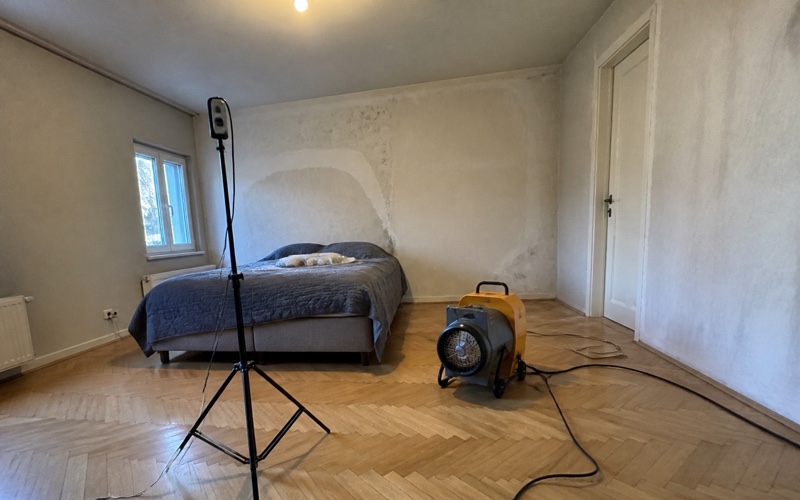
How it works without any products
Heat treatment uses controlled heat and nothing else. The temperature in the room, or inside a heat tent, is raised to around 60 °C and held there until every developmental stage of the insect has died.
Afterwards there is no chemical substance in the room at all: no residue, no smell, no airing period. The space is usable as soon as it has cooled.
The reason it works where chemicals struggle is that heat does not have to find the insects. It penetrates mattress cores, furniture joints and the inside of a suitcase — and it kills eggs, which is what most insecticides cannot do.
What it particularly suits
- There is a baby or small children in the home.
- Someone in the household is pregnant.
- There is asthma, a respiratory condition or a chemical allergy.
- There is an aquarium that cannot be safely covered or moved.
- A fast result with no downtime is needed — a hotel room, a rental flat before a tenant moves in.
- The bedbugs have already proved resistant to a previous chemical treatment.
- Individual items need treating — a mattress, a sofa, luggage, fur.
Honestly about the limitations
- No residual action. Heat kills everything present in the room at the moment of treatment but offers no protection against insects arriving later. If the source is in a neighbour's flat, they can come back.
- More expensive than chemical treatment and it takes longer on site, because the space has to be brought up to temperature gradually and held there.
- Not suitable for every property. In very large or poorly insulated spaces the required temperature can be hard to reach and hold evenly, and an unheated cold spot is exactly where the survivors will be.
- Heat-sensitive items have to come out: candles, cosmetics, aerosols, medicines, vinyl records, electronics and some plastics.
For that reason we often propose a combination: heat treatment in the rooms where chemicals are not wanted, and a chemical barrier treatment at the entry routes and on the shared-area side, where nobody has direct contact.
When chemicals are still the right answer
Heat treatment is the only genuinely chemical-free method that actually eliminates a colony, but it does not suit every situation, and we say so rather than selling it universally.
- Cockroaches. Gel bait is both more effective and far less disruptive. Heating a flat to kill cockroaches that will simply walk back up the riser next week solves nothing.
- Ants with a nest outside. Heat cannot reach the nest, and the nest is the problem.
- Continuous reinfestation from a neighbour. Without residual action, heat treats today's insects and nothing else.
- Wasp nests. A different job entirely.
Where chemicals genuinely cannot be used and heat is not viable either, the honest answer is sometimes that the problem cannot be fully solved, and we would rather say that than take the money.
About natural remedies
Essential oils, diatomaceous earth, vinegar and similar products are widely marketed as a natural alternative. In practice they mostly act as repellents: they deter insects from one spot but do not eliminate the colony and have no effect on eggs.
The usual result is that the insects move somewhere else in the same property, while the population continues to grow. See why shop products do not work.
If the aim is to avoid chemicals, heat treatment is the only method that achieves that and genuinely eliminates the colony at the same time.
What eco-friendly pest control actually means
The label appears often in advertising but has no agreed definition, so it is worth knowing what it can mean in practice.
- Genuinely chemical-free. Heat treatment, or physical removal. This is the only version where the claim is unambiguous.
- Lower-toxicity products. Real and useful, but still chemical treatment with the same drying and airing requirements. It is a reasonable claim; it is not the same claim.
- Reduced quantity through targeting. Gel baits use grams rather than litres. Also real, also not chemical-free.
- Nothing in particular. Sometimes the word is simply marketing attached to an ordinary spray treatment.
The practical question to ask any provider is not whether the treatment is eco-friendly but what exactly will be applied, in what quantity, and whether anything remains afterwards. Those have concrete answers.
It is also worth being clear that chemical-free does not mean effort-free. A heat treatment requires the room to be prepared much as a chemical one does: furniture pulled out so air circulates behind it, drawers opened, heat-sensitive items removed, and the space left to the equipment for several hours. Heat only kills what it reaches, so a sealed plastic box of clothes in the middle of the room is a cold refuge, not a protected one.
Done properly, though, it is the one method where the honest answer to the question people care most about — is anything left behind in my home afterwards — is simply no.
Book a pest control visit
Fill in the form — we reply within 5 minutes. We work weekends and handle urgent callouts.