
Pest control in a flat
A flat in a block of flats is the most awkward property in pest control. Not because the treatment itself is harder, but because your flat is not a sealed box. Insects move between flats, and that single fact shapes the whole approach.
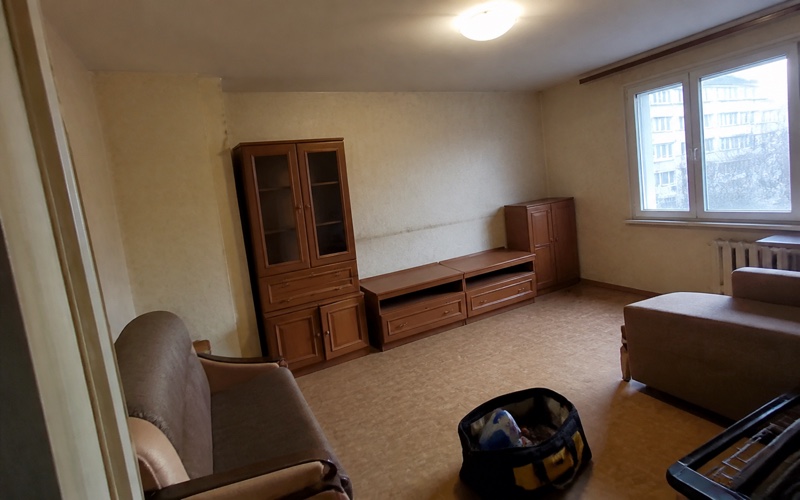
Why a flat is not a closed space
In Riga’s Soviet-era panel blocks — the series buildings you see across Purvciems, Ķengarags and Imanta — flats are joined by shared ventilation shafts, common pipe risers, gaps in the floor slabs and electrical conduits. Cockroaches and bedbugs travel along all of them without any difficulty.
Two things follow from that. First, the source of the infestation may not be in your flat at all; you may simply be the person who noticed it first. Second, after a neighbour has their flat treated, insects often move across to you in numbers, because the treated flat has become uninhabitable for them and yours has not.
This is why, when we treat a flat, we always treat the crossing points as well: ventilation grilles, pipe penetrations, gaps behind skirting boards and partition walls, and the perimeter of the front door. Treating only the rooms and leaving the routes open is the most common reason a flat is reinfested a fortnight later.
Which insects turn up in Riga flats
In practice almost every flat call-out comes down to a handful of species, and each has its typical room.
| Insect | Where you usually find it | Typical sign |
|---|---|---|
| Bedbugs | Bedroom, bed | Bites noticed in the morning, dark specks on the mattress |
| Cockroaches | Kitchen, bathroom | Insects at night, small black dot-like stains |
| Gnats and fruit flies | Kitchen, sink, plant pots | Tiny flies around fruit or the drain |
| Ants | Kitchen, along the skirting | A trail along the wall, activity around sweet food |
| Silverfish | Bathroom | Silvery, wriggling, active at night |
| Pantry moths | Kitchen cupboards | Small moths in the evening, webbing in dry goods |
| Fleas | Floors, rugs | Bites around the ankles |
If you are not sure what you have, describe it in the enquiry form — where you saw it, at what time of day, how many. That is usually enough for us to name the likely species and the right method before we arrive.
How long you have to be out
For a chemical treatment you need to leave the flat for roughly 2 to 4 hours and then air it thoroughly. With the gel bait method, normally used for cockroaches, you do not have to leave at all and cupboards do not need emptying.
You cannot be in the rooms during a heat treatment, but once the flat has cooled it is immediately usable and there are no chemical residues to wait out.
We give you the exact figure before the work, based on the method chosen and on whether there are children, pets or anyone with a respiratory condition in the household. If you tell us in advance, we plan a longer airing period and wipe down the accessible surfaces afterwards.
Preparation decides the result
Preparation is not a formality. It directly decides whether the product reaches the places insects actually live. A packed wardrobe or furniture that was never pulled away from the wall means untreated zones, and a colony that survives in them.
- Kitchen. Clear the worktops, move food into sealed containers, pull the fridge and cooker out if you can.
- Bedroom. Strip the bed, wash the bedding hot, and give us access to the bed frame and the sides of the mattress.
- Everywhere. Clear the floor along the skirting boards, and move things away from the walls so we can reach them.
- Pets and children. Take fish tanks, cages and pet bowls out or cover them, and put toys away.
The full room-by-room list is on the how to prepare page, and what to do afterwards is on after the treatment.
When one treatment is enough
For ants, silverfish, gnats or pantry moths caught early, one visit usually settles it. For cockroaches, a well-placed gel bait treatment normally does the job in one go, with the colony collapsing over two to four weeks.
Bedbugs are the honest exception. Almost no insecticide kills eggs, so a second treatment after 10 to 14 days deals with the generation that hatches afterwards. We agree that up front rather than presenting it as bad news later. Heat treatment often avoids the second visit entirely, because heat kills eggs as well.
If the source is in a neighbour’s flat, no treatment of yours will hold indefinitely. We will treat your flat and build a barrier at the entry routes, but the lasting fix is a coordinated treatment — see pests coming from neighbours.
Rented flats: who arranges it
In a rented flat there are two separate questions: who books the work, and who pays for it.
Practically, anyone can submit the enquiry — tenant or landlord. All we need is access to the flat at the agreed time. We do not ask for proof of ownership.
Who pays is a matter between the parties and depends on when and how the problem started. We are not lawyers and we do not rule on it. What we can say from experience is that it is almost always cheaper for both sides to deal with the insects first and settle the cost afterwards, because delay makes the treatment larger and more expensive.
What it costs
Flat treatment starts from €55 for a one-room flat, €60 for two rooms and €65 for three. A repeat treatment, where the pest requires one, is from €60.
- Number of rooms and floor area. The price rises in steps rather than in proportion to the square metres.
- Extent of the infestation. A problem caught early needs a smaller treatment than one that has spread through the flat.
- Species. Bedbugs often need two visits; cockroaches usually need one gel treatment.
- Method. Heat treatment costs more but frequently resolves the problem in a single visit.
- Several flats in one building. The price per flat is lower when neighbours book together.
Full figures are on the prices page.
Book a pest control visit
Fill in the form — we reply within 5 minutes. We work weekends and handle urgent callouts.