
Bedbug treatment in an apartment
Bedbugs in an apartment differ from bedbugs in a house in one crucial respect: you cannot control your own boundary. While a colony survives in the flat next door, yours stays open to re-infestation.
How bedbugs move between apartments
In Riga's Soviet-era blocks bedbugs travel along routes ordinary treatment cannot reach: ventilation shafts, pipe shafts, electrical conduits, floor voids and gaps around the front door frame.
Movement is usually vertical — up and down a single riser — more often than horizontal. So if you have bedbugs, the most likely sources are the flat above or below you, not the one next door.
Migration intensifies after a neighbour's treatment: the insects flee the treated flat. This is the most common reason bedbugs appear in an apartment 'for no reason'.
Barrier treatment — what makes apartment work different
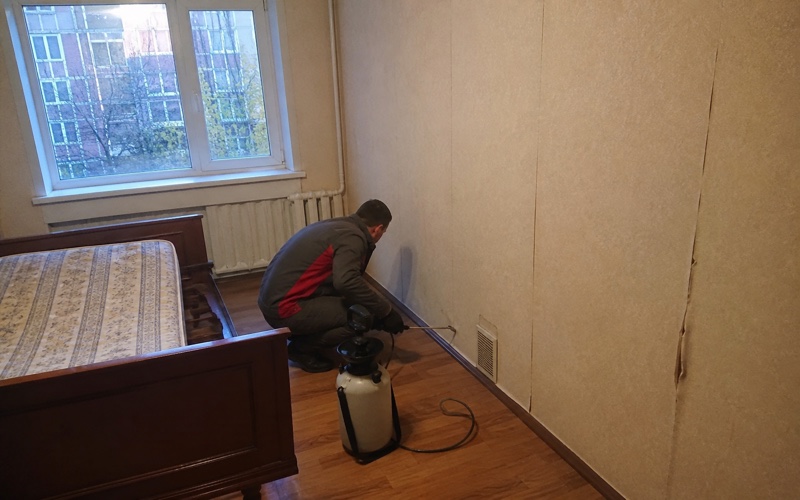
In a house it is enough to treat the harbourages. In an apartment we additionally treat the crossing points to form a barrier: ventilation openings and their surrounds, pipe runs in the bathroom and kitchen, the front door perimeter and threshold, skirting boards along shared walls, and the area around sockets and switches on shared walls.
This barrier does not solve the problem in the neighbour's flat, but it substantially reduces the chance of re-entry and buys time while the wider situation is dealt with.
What to do if neighbours have them too
If you know or suspect bedbugs are in other flats, the most effective answer is simultaneous treatment of several apartments on one riser.
That is usually organised by the building manager — in Latvian, the apsaimniekotājs. See pest control for property managers. If that is not possible, we treat your flat with enhanced barrier work; it is not ideal, but it is a practical answer and we say so honestly.
Not recommended: moving the bed to another room or sleeping at a relative's. Bedbugs follow the person and colonise the new sleeping place, while the population in the old one survives. The result is a wider problem.
Preparation in an apartment
Preparation matters more in a flat because rooms are smaller and more crowded than in a house. The essentials: bedding and textiles into a 60 °C wash, furniture pulled away from walls, wardrobes emptied in the rooms where bedbugs were found, and floors vacuumed thoroughly.
Full list: how to prepare your property.
What it costs and how long it takes
Treating an apartment for bedbugs starts from EUR 55 for a one-room flat, from EUR 60 for two rooms and from EUR 65 for three. We give the exact figure once we have the details.
The treatment itself takes 1–2 hours in a one-room flat with the chemical method. Heat treatment needs 4–8 hours, because the room has to be brought up to temperature gradually and held there.
After chemical treatment you should be out for 2–4 hours and then air the property thoroughly. After heat treatment the flat is usable as soon as it has cooled.
If a second treatment is needed after 10–14 days, we agree it upfront and include it in the quote. See prices.
Book: bedbug treatment in an apartment
Fill in the form — we reply within 5 minutes and quote a price before any work starts.