
Pest control for property managers
In a block of flats a pest problem is rarely one flat’s problem. Treating a single flat gives a short-lived result if the colony survives next door or in the basement — and residents then read that as poor workmanship.
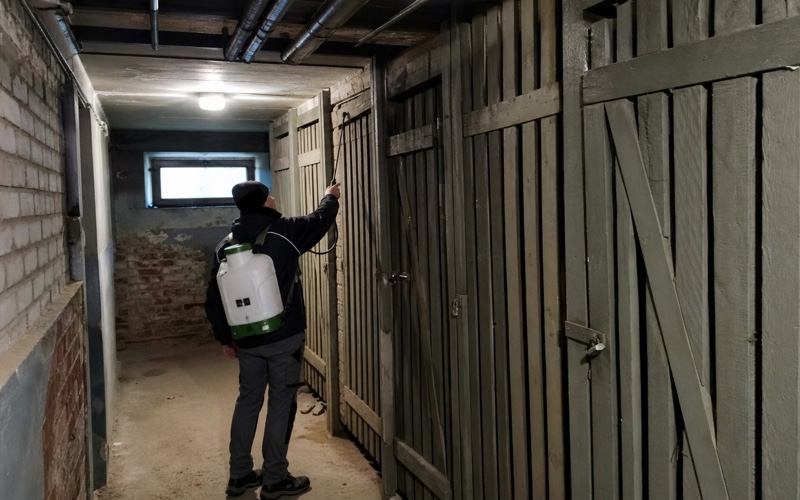
Why treating one flat does not help
Cockroaches and bedbugs move between flats through ventilation shafts, pipe risers, gaps in the floor slabs and electrical conduits.
Treat one flat and the insects retreat into neighbouring units, then return a few weeks later. To the resident that looks like a job badly done, when the real cause is the scope of the work rather than its quality.
Only a coordinated approach produces a lasting result: simultaneous treatment of several flats on the same riser or in the same section, together with the shared areas.
What servicing a building covers
Treatment of the shared areas — basement, stairwell, refuse room, plant rooms. Simultaneous treatment of several flats on one riser. Treatment of the crossing points: ventilation shafts and pipe penetrations. And recording the damp and other contributing factors, so they can actually be fixed.
See also pest control in basements and stairwells, which is where most building-wide problems begin.
How a building treatment is organised
- 1
Survey.
We establish which flats and shared areas are affected and how far the infestation has spread.
- 2
Scope agreed.
Which riser or section is treated, and on what date.
- 3
Residents informed.
Notice with preparation instructions, ideally at least a week ahead.
- 4
Treatment day.
Shared areas and the participating flats treated in one pass, so nothing is left as a reservoir.
- 5
Findings recorded.
Flats that were not accessible, and the structural causes found, written up for the manager.
The flats that could not be entered matter as much as the ones that were. If a third of a riser is skipped, expect the problem to rebuild from there.
Informing and preparing residents
In practice the hardest part is not the treatment but resident preparation: if some flats are unprepared or inaccessible, the result will be incomplete.
We help prepare the information for residents — what to do before the treatment, how long to be out, what to do afterwards. The preparation steps are also set out on how to prepare, which you can reference in the notice.
It is worth being explicit with residents that being absent is not the same as being prepared. An empty flat with no access and no preparation is the most common reason a coordinated treatment underperforms.
Regular servicing and billing
For buildings with recurring problems we recommend regular preventive treatment with monitoring in the shared areas. It costs less than repeated emergency call-outs and reduces the volume of resident complaints.
We work by invoice, with terms agreed before the work starts. Shared-area and building-wide work is quoted after a survey, because the number of stairwells, the size of the basement and the extent of the infestation differ from building to building.
What to record after a treatment
What gets written down after a building treatment determines whether the next one is easier or a repeat of the same argument.
- Which flats were treated, and which were inaccessible or unprepared. This is the single most useful item, because it predicts where the problem rebuilds.
- Which shared areas were covered, and the condition each was in.
- Contributing factors found: blocked ventilation, leaks, standing water, stored waste and cardboard in cellars.
- The date and the species, so a pattern across seasons is visible rather than guessed at.
- What residents were asked to do, and what was actually done.
We provide this after the work. Its practical value is that it converts a complaint about pests into a specific, dated list of building defects that somebody can be asked to fix.
Preparing residents
The notice to residents does more for the outcome than any product choice, and it needs to say four things clearly.
- What is happening and when, with a date and a time window, issued at least a week ahead so people can arrange access.
- What each household must do beforehand. Clear access to walls and skirting boards, empty kitchen units where cockroaches are involved, strip beds where bedbugs are, cover fish tanks and remove pet bowls. Link them to how to prepare rather than repeating it all in the notice.
- How long to be out, usually 2 to 4 hours for a chemical treatment, and what to do on returning.
- That participation matters. An untreated flat on the riser is where the population survives and rebuilds, which is worth stating plainly rather than leaving as an implication.
Book a pest control visit
Fill in the form — we reply within 5 minutes. We work weekends and handle urgent callouts.