
Fleas in a home with pets
If there is a pet in the property and there are fleas, the problem has two sides and both must be dealt with at once. This is the one case in pest control where our work alone cannot succeed without another party.
Why both must happen together
About 5% of a flea population is on the animal. The other 95% — eggs, larvae and pupae — are in the environment: carpets, upholstery seams, skirting boards and the pet's bedding.
Two conclusions follow. Treat only the animal and fleas return from the environment within days. Treat only the property and the animal brings them straight back.
Our role is clear: we treat the property. Treating the animal is a vet's job — we do not do it and we do not recommend specific products. The ideal scenario is veterinary treatment on the same day as, or the day before, the property treatment.
Where the problem is concentrated
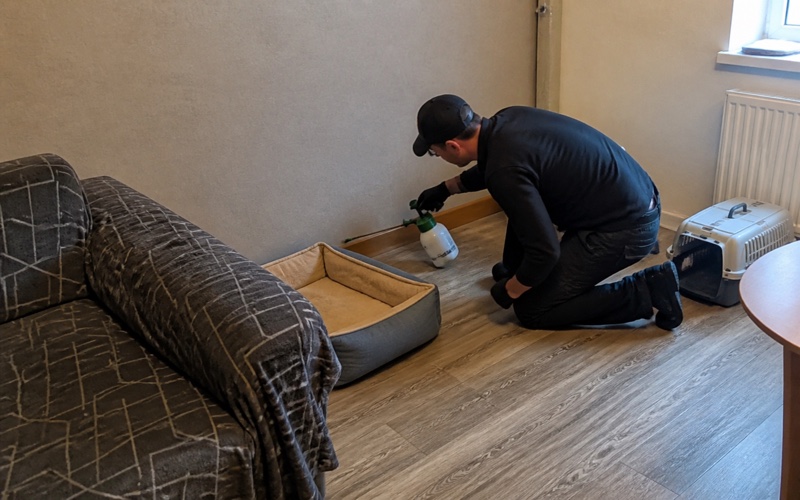
Larvae are not mobile — they develop where they fall from the animal. So the treatment map follows the pet's daily route precisely:
- The bed and the area around it — the highest concentration of larvae.
- Carpets and soft furniture, especially where the animal sleeps.
- Skirting boards and floor gaps along the walls.
- Under furniture, where dust and organic debris collect.
Fleas do not jump higher than about one metre, so treatment concentrates on floor level.
What to do with the pet's things
The bedding and textiles hold the greatest concentration of larvae — often more than the animal itself — so treating them is not optional.
- Bedding, blankets, towels — 60 °C wash. If the fabric will not allow it, tumble dry on high for at least 30 minutes.
- The bed base, if not washable — vacuum all seams and gaps thoroughly; in bad cases consider replacing it.
- Toys — washable ones washed, the rest frozen for a few days.
- The carrier — washed and the seams vacuumed.
- Bowls — removed during treatment and washed before use.
- The rug under the bed — vacuumed very thoroughly, and the bag disposed of outside the property immediately.
Ideally do all of this on the same day as the property treatment and the vet visit.
Why the result takes 2–4 weeks
With fleas the waiting period is longer than for most pests, and the reason is the pupae.
Adult fleas die within the first few days after treatment. But the pupa is protected by a sticky cocoon that insecticides cannot practically penetrate, and it can wait for weeks. Hatching is triggered by vibration, warmth and carbon dioxide — that is, the presence of a person or animal.
So the advice after treatment is counter-intuitive: walk around the rooms more, not less, and vacuum regularly. Vibration provokes the pupae to hatch, and the new fleas come into contact with the residual product rather than staying protected in the cocoon.
During this period the treated floor edges and skirting boards must not be washed — that is exactly where the product is working.
Safety for the animal
The pet should not be in the property during treatment and airing. Aquariums are sealed and the aeration switched off for the duration — fish and amphibians are the most sensitive to insecticides.
Cages with birds and rodents are removed from the property, as are bowls and toys. More detail: pest control with pets.
Book: fleas in a home with pets
Fill in the form — we reply within 5 minutes and quote a price before any work starts.