
Pest control in a summer house
An empty building is ideal for pests: nobody disturbs them, nothing pushes back, and by spring the colony is well established. That is why summer house problems almost always surface at the start of the season.
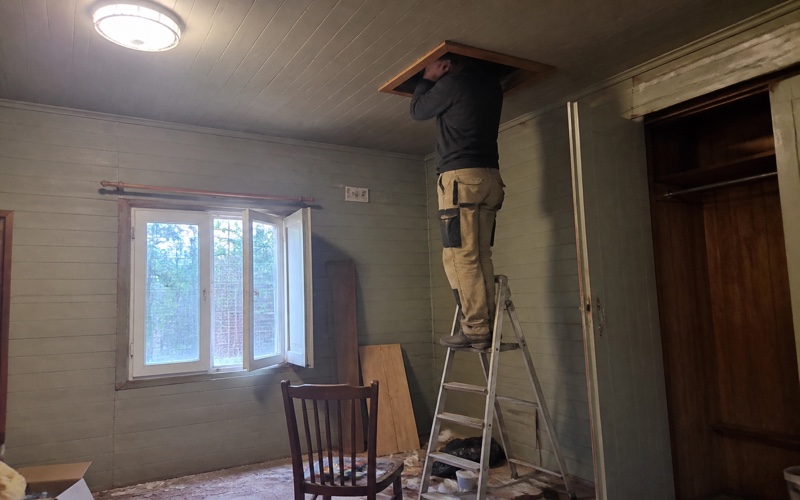
What happens while the house stands empty
Over the winter months, wasps settle undisturbed in the loft, woodworm spreads through the timber, earwigs and spiders accumulate, and silverfish appear in the damp rooms.
Unlike a permanently occupied house, where a problem is noticed early, in a summer house it develops for several months with nobody watching.
So the sensible approach is a treatment at the start of the season, before the building is in active use, rather than after the problem has already spoiled a weekend.
What to check when you open up after winter
- 1
Loft and eaves.
Look and listen for wasp activity before you start moving things around.
- 2
Structural timber.
Small round holes with pale dust beneath them mean active woodworm.
- 3
Damp rooms.
Silverfish and earwigs indicate a moisture problem that will not fix itself.
- 4
Beds and soft furniture.
Check seams and the underside of mattresses, especially if the house is let out.
- 5
Dry goods left over winter.
Flour, grains and pet food are where pantry moths start.
Wasp nests are the most common call-out
A seasonally empty building is a safe place for a wasp nest: the loft, a shed, under the roof fascia, behind cladding boards.
By midsummer a nest can be substantial, and removing it becomes both harder and more dangerous. Dealing with it in spring, when the nest is small, is markedly simpler. See wasp nest removal — from €60.
Timber structures
Summer houses are often timber buildings with untreated structural elements, weakened further by moisture swings and poor winter ventilation. That is favourable ground for woodworm.
If you notice small round holes and pale wood dust on the beams or cladding, that is a sign of an active infestation — see woodworm treatment. Closing the building up for winter with the loft ventilation working is the single most useful preventive step.
Treatment prices depend on the building and the scope; we confirm after we know which zones are involved. We work in Riga and the surrounding area, and assess sites further out case by case.
Closing the house up for winter
Most of the problems found in spring are created in October, so the end of the season is the cheapest time to prevent them.
- Remove all food. Flour, grains, pet food and open packets, not just what is obviously perishable.
- Empty and clean the bins, and leave them open and dry.
- Ventilate the loft. Dry timber slows woodworm considerably; damp still air does the opposite.
- Seal what you can. Gaps around pipe entries, under doors and in window frames.
- Fit or repair mesh on vents and chimney openings, which is how wasps get into the loft in the first place.
- Move firewood away from the walls and store it raised off the ground.
- Strip and bag the beds if the house is let out during the season.
Letting the house out
If the summer house is rented to guests, the risk profile changes and starts to resemble a small hotel.
Guest turnover is how bedbugs travel, and a house let for short stays through the season is exposed to the same statistics as any accommodation business. It has nothing to do with cleanliness and everything to do with how many different sets of luggage come through.
The practical response is inspection between lets rather than treatment after complaints: mattress seams, bed frame joints, the underside of upholstered furniture and the wardrobe. It takes minutes per room and catches an introduction while it is one bed rather than one house.
If a guest reports bites, do not spray anything from a shop before an inspection. Shop aerosols scatter bedbugs into adjacent furniture and make the job several times larger.
Book a pest control visit
Fill in the form — we reply within 5 minutes. We work weekends and handle urgent callouts.