
When each insect appears: a seasonal guide
Some insects in Latvia are strongly seasonal; others are equally active all year round. Knowing which is which is practically useful: it tells you whether a problem will pass on its own, whether to expect it again next year, and when prevention is worth doing.
A month-by-month calendar
| Period | What becomes active |
|---|---|
| March-April | Ants start foraging; tick season begins; queen wasps look for nest sites |
| May-June | Mosquitoes; peak ant activity; wasp nests growing; flies |
| July-August | Peak mosquitoes and flies; wasp colonies large; fruit flies |
| August-September | Wasps at their peak and at their most aggressive; second tick surge |
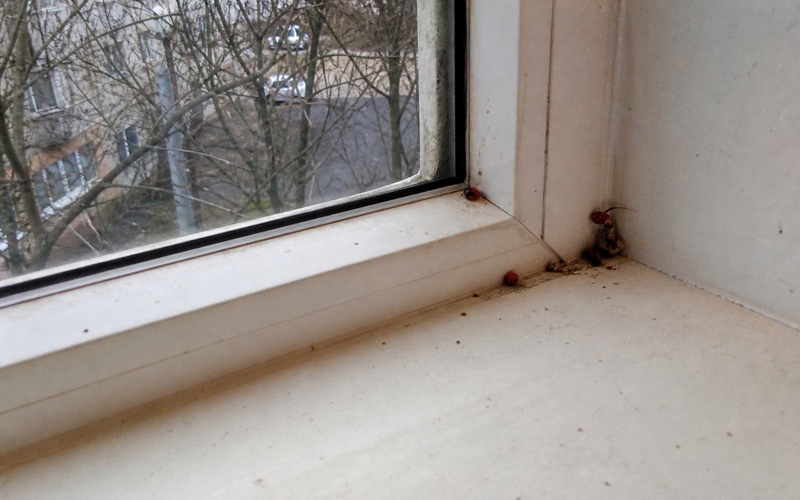
| October-November | Insects come indoors to overwinter: ladybirds, shield bugs, earwigs, spiders |
| December-February | Outdoor insect activity stops; indoor pests continue unchanged |
The Riga coast and Jurmala run a little ahead of the inland areas in spring and a little behind in autumn, but the sequence is the same.
Which insects are active all year
Indoor pests effectively have no season, because a heated flat has a stable climate in January and July alike:
- Bedbugs — equally active in winter and summer.
- Cockroaches — unchanged all year.
- Pantry moths and clothes moths — the cycle is faster in summer, but the problem exists year-round.
- Silverfish — driven by humidity, not by the calendar.
- Fleas — breed all year in heated rooms.
Waiting for winter to solve it is therefore pointless for these species. It will not happen, and a bedbug population left to run from October to March is a substantially bigger job in spring.
Autumn invaders: when no treatment is needed
In October and November ladybirds, shield bugs and other outdoor insects often come inside looking for somewhere to overwinter. They do not breed indoors, they do not damage anything, and they disappear in spring.
In that case mechanical collection and sealing the gaps around windows and in the facade is enough. Treatment is not necessary, and we will not offer it. If we come out and find that is what is happening, we will tell you so.
The one thing worth doing is the sealing, in September, before they arrive. Once several hundred are already in the loft or behind the cladding, the sealing keeps them there rather than out.
When to carry out prevention
- March-April. Perimeter treatment against ants and ticks before the colonies establish; summer house treatment before the season starts.
- May-June. Check the loft and eaves for wasp nests. A nest the size of a golf ball with a single queen is far simpler and safer to remove than a colony of several thousand in August.
- September. Seal gaps before the autumn invasions.
- Any time. Indoor pests, which do not observe seasons at all.
See preventive treatment and summer house pest control.
A year in practice
A simple annual plan for a household, if you want one.
- 1
Spring.
Perimeter treatment if you have a garden and had ants or ticks last year. Check the loft and eaves for early wasp nests.
- 2
Summer.
Deal with fruit flies at the source rather than with traps. Keep the wasp situation under review — a nest near a door or a children's play area is worth removing; a nest at the far end of a large garden will die off at the first frosts on its own.
- 3
Autumn.
Seal window and facade gaps in September. Check stored dry goods before winter, because pantry moths overwinter perfectly happily in a warm kitchen cupboard.
- 4
Winter.
The season for the indoor pests: bedbugs, cockroaches, moths, silverfish. If something appears now, it is not going to pass by itself.
Why season affects availability as well as results
A practical point that is rarely mentioned: timing affects not only the outcome but how quickly you can get the work done.
August and September are the busiest weeks of the year because of wasps, and a wasp nest by a front door is a genuine emergency, so those jobs take priority. Booking a preventive garden treatment in the middle of that period means waiting longer than the same job booked in April.
Indoor work is steadier through the year, with a rise after the summer holidays as bedbugs brought back in luggage build up enough to be noticed — typically September and October. See bedbugs after travel.
Urgent callouts are handled regardless of the season, weekends included, and we reply to enquiries within 5 minutes.
One further seasonal effect worth knowing about is what happens in Riga's blocks of flats when the heating goes on in October. Ventilation patterns change, the risers warm up, and cockroaches that were spread thinly through a building concentrate around the warm shafts. Complaints from several flats on one riser within the same fortnight are common in late autumn, and they usually mean one colony rather than five.
The mirror image happens in spring, when people open windows again and the first mosquitoes and flies arrive from outside. Those are almost never a resident population and almost always a screening question. See mosquito control.
Book a pest control visit
Fill in the form — we reply within 5 minutes. We work weekends and handle urgent callouts.