
Clothes moth treatment
Clothes moth larvae feed on natural animal fibres - wool, fur, silk and feathers. The holes in your clothes are not made by the moths flying about, but by larvae that have already been living in the wardrobe for weeks.
How to spot it
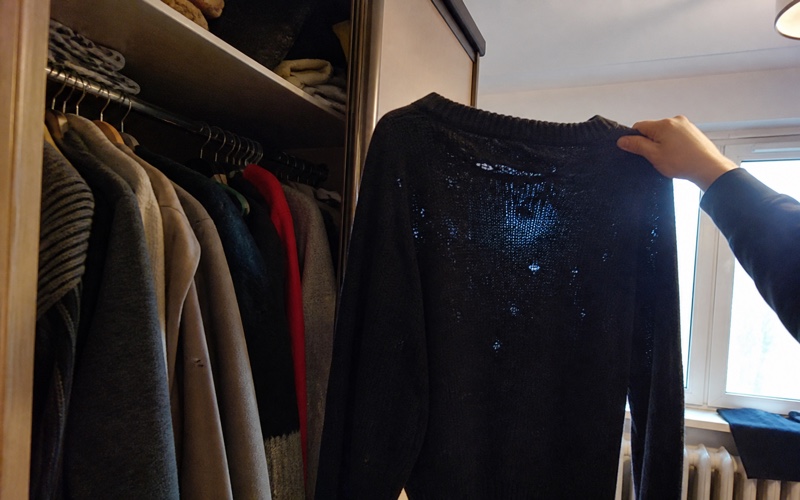
Holes in woollen clothes
Irregular holes in jumpers, coats and scarves - often in items that were put away unwashed.
Small moths in the wardrobe
Pale yellowish moths 6-8 mm long that are reluctant to fly and tend to run across the fabric instead.
Silky tubes
Larvae build silken cases that often match the colour of the garment, because they incorporate its fibres.
Sandy grains
Droppings in the folds of clothing and in the corners of wardrobe shelves.
Bare patches on rugs
On wool rugs, damage often starts under furniture where the pile is undisturbed.
What clothes moths damage and what they do not
The larvae feed on keratin, so they damage only natural fibres of animal origin: wool, cashmere, fur, feathers, silk, felt and natural wool rugs.
Synthetics (polyester, acrylic, nylon) and cotton are usually left alone - with one important exception. If the fabric is soiled, sweat, food marks and skin cells make even synthetic material attractive.
This is why moths so often ruin exactly the garment that went into the wardrobe unwashed, and why seasonal items left untouched for months are the usual casualties.
Why they thrive in a Riga flat
Two local factors matter. First, the seasonal wardrobe: heavy wool coats, hats and scarves are in use from October to April and then stored untouched for five months, which is exactly the undisturbed period a larva needs.
Second, humidity. Drying laundry indoors during the heating season, poor ventilation in a fitted wardrobe and cold external walls behind a cupboard all raise local humidity, which the larvae prefer.
Clothes moths also avoid light and movement, so they concentrate in the parts of a wardrobe that are opened least: the back of the top shelf, the bottom of a suit bag, the inside of a rarely used drawer. Anything sealed in a bag for a season is worth checking first.
How the treatment is carried out
The wardrobe is emptied and we treat the internal surfaces, shelf joints, corners and back panels - the places where pupae and larvae actually sit. Textiles that cannot be washed are handled separately.
Where the infestation is extensive and affects valuable textiles or fur, heat treatment is often the better option: it destroys every stage without chemicals and does not damage fabric.
Before treatment it helps to wash everything washable at 60 degrees or send it for dry cleaning, and to put anything unwashable in the freezer for several days. Freezing at minus 18 degrees for 72 hours kills eggs and larvae reliably.
Why cedar and lavender do not fix it
Cedar balls and lavender sachets repel adult moths to some extent, but they do not kill the larvae and eggs already in the wardrobe. Their scent fades over months and the protection disappears entirely.
They are worth using as prevention in a wardrobe that is already clean, not as a remedy for an existing infestation. The same applies to the traditional advice about airing clothes in sunlight: it disturbs the larvae, which is helpful, but it does not clear a population out of the wardrobe structure.
Keeping the wardrobe clear afterwards
- Wash or dry clean before storing. This is the single most effective habit - clean wool is far less attractive than soiled wool.
- Store seasonal items in sealed bags or boxes, not loose on a shelf.
- Vacuum the wardrobe interior every few months, including shelf corners and the underside of shelves.
- Move rugs and furniture occasionally so the pile under them is disturbed.
- Use pheromone traps as a monitor to catch a new infestation early rather than as a treatment.
If the damage is confined to a single garment brought in from elsewhere, check what comes in with second-hand items - the same logic applies to second-hand clothing.
How to check a wardrobe
A proper inspection finds the problem while it is still confined to one or two garments, which is a very different job from clearing an established infestation.
- 1
Take everything out.
Larvae live in the least disturbed places, so a check with the wardrobe full tells you almost nothing.
- 2
Inspect the wool items individually
, paying attention to folds, cuffs, collars and underarms - the parts that carry sweat and skin cells.
- 3
Look for the silken cases
, which are the size of a grain of rice and often the colour of the garment they came from.
- 4
Check the wardrobe structure:
shelf corners, the underside of shelves, the back panel and the gap behind the unit.
- 5
Look under the rug and the heavy furniture
in the same room, since wool rugs are frequently a second source.
- 6
Vacuum everything
, then empty the vacuum outside the flat.
What to do with items you cannot wash
Wool coats, cashmere, fur and tailored garments cannot go through a 60 degree wash, which leaves three practical options.
- Freezing. Seal the item in a plastic bag, remove as much air as possible and leave it at minus 18 degrees for at least 72 hours. This kills eggs, larvae and pupae. Let it return to room temperature before opening the bag.
- Dry cleaning. Effective and safe for tailoring, though it treats only that item and does nothing about the wardrobe.
- Heat treatment. For a large volume of valuable textiles or fur, processing the items in a heat chamber at around 60 degrees destroys every stage at once without chemicals and without damaging the material.
Whichever route you choose, the wardrobe itself still needs treating. Cleaning the clothes and returning them to an untreated wardrobe is the single most common reason an infestation restarts a month later.
Wool rugs and upholstery
People think of clothes moths as a wardrobe problem, but a significant share of the damage we see is on floors and furniture rather than clothing, and it goes unnoticed for much longer.
A wool or wool-blend rug under a heavy sofa, a sisal-backed carpet in a rarely used room, or the wool felt inside a piano are all classic sites. The pile there is never walked on, never vacuumed and never exposed to light, which is exactly what the larvae need. The damage shows as thinning patches rather than distinct holes, and it is usually found when the furniture is finally moved.
Upholstery with wool or horsehair filling - which includes a lot of older and antique furniture - can be infested internally with no visible sign at all except moths appearing in the room each spring.
Where a rug or a piece of upholstery is the source, treating only the wardrobe achieves nothing, and this is one of the most common reasons a clothes moth problem is reported as recurring. Part of our inspection is establishing which of the two you actually have.
Book a pest control visit
Fill in the form — we reply within 5 minutes. We work weekends and handle urgent callouts.