
Small insects in the apartment: what are they
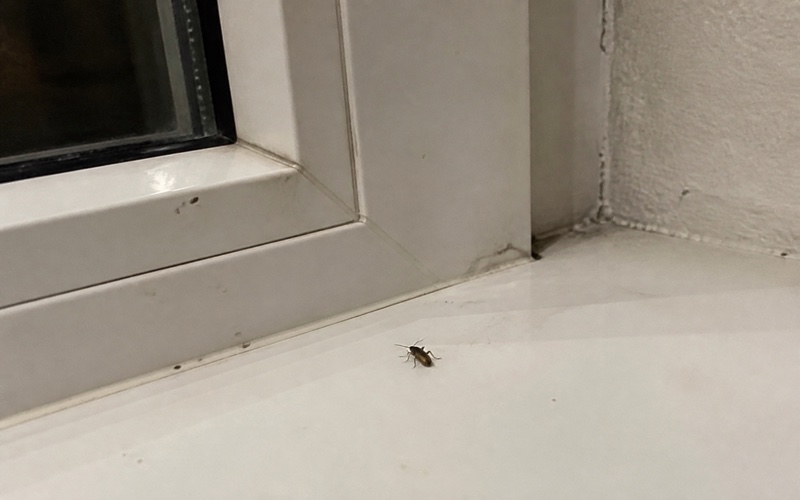
Before deciding what to do, you need to know what you are dealing with. This page narrows the possibilities down using three features: which room the insect was found in, how big it is, and whether it flies, jumps or crawls.
By room: the fastest route
The room narrows the possibilities more than any other single feature:
- Kitchen, food cupboard — pantry moths, stored product beetles, fruit flies, cockroaches.
- Bathroom, damp rooms — silverfish, drain flies. See gnats.
- Bedroom, the bed — bedbugs.
- Wardrobe — clothes moths, carpet beetles.
- Plant pots — fungus gnats, see gnats.
- Floor level, biting ankles — fleas.
- Corners, webs — spiders.
The logic behind this is straightforward: almost every indoor insect is tied to either food, moisture or a host, and those are distributed by room. An insect found somewhere with none of the three is usually an accidental visitor rather than a resident.
Two rooms cause more confusion than the rest. A living room with a sofa people sleep on behaves like a bedroom for identification purposes, so bedbugs belong on that list. And a hallway or storage cupboard is often where things arrive rather than where they live — a suitcase, a delivery box, a bag of birdseed.
By behaviour
| Behaviour | Most likely |
|---|---|
| Jumps when you get close | Fleas |
| Runs fast, flees from light | Cockroaches, silverfish |
| Flies slowly near the ceiling | Pantry moths, clothes moths |
| Tiny, flying around plants | Fungus gnats |
| Sits motionless on tiles | Drain flies |
| Crawls slowly, flat body | Bedbugs |
| Wriggling movement, silvery | Silverfish |
By size
- 1-3 mm — fungus gnats, small flies, pharaoh ants, young bedbug nymphs.
- 4-7 mm — bedbugs, silverfish (up to 12 mm including the tail filaments), stored product beetles.
- 8-15 mm — cockroaches, moths with wings spread, ants.
- Over 15 mm — usually outdoor insects that have come in by accident and do not breed indoors.
If you cannot identify it: that is not an obstacle. Choose "Not sure / other insect" in the enquiry form and describe where and when you see them — we identify the species on site. Often that is safer than guessing.
How to describe it in the enquiry
If you cannot pin it down, a few details let us prepare properly before travelling.
- Which room, and whereabouts in it.
- Approximate size against something familiar — a grain of rice, a match head, a sesame seed.
- Flies, jumps or crawls. The single most informative detail after the room.
- Time of day you see them, and whether it is one or many.
- How long it has been going on, and what changed just before it started.
A photo helps most of all, even a poor one. Pressing an insect under clear tape on white paper works better than trying to photograph something 2 mm across.
When no treatment is needed
Honestly: not every insect in a flat is a problem. In autumn ladybirds, shield bugs and other species often come indoors looking for somewhere to overwinter. They do not breed indoors, they cause no damage and they disappear after a few weeks.
In that case mechanical collection and sealing the window gaps is enough. If we come out and find that is the situation, we say so and we do not push a treatment.
The dividing line is whether the insects are breeding in the property. Signs that they are: numbers increasing rather than steady, individuals of different sizes, and finding them in places with no connection to a window or door.
See also the seasonal guide.
Equally, some insects indoors are actively harmless or even useful. House spiders eat other insects and do not damage anything; a spider population is a sign that there is enough other prey in the flat to sustain it, which is the more interesting piece of information. Silverfish do not bite and carry nothing, but they do indicate a humidity problem worth addressing on its own terms.
Book a pest control visit
Fill in the form — we reply within 5 minutes. We work weekends and handle urgent callouts.