
Insects in the bathroom
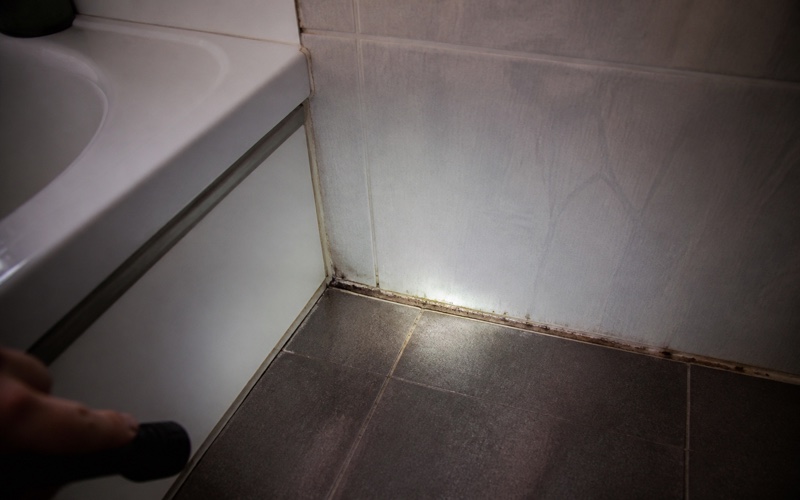
The insects found in bathrooms have one thing in common: they are all drawn to moisture. That means a lasting solution always involves not just a treatment but removing the cause of the damp, which in Riga flats is usually the ventilation.
What you usually find
- Silverfish — silver-grey, scaly, with a wriggling movement; hide in tile grout and under sanitary ware. See silverfish treatment.
- Drain flies — furry, with heart-shaped wings, sitting motionless on the wall; they breed in the biofilm inside the drain trap. See gnats in the flat.
- Earwigs — with pincers at the tail end; they come in from damp places outside. See earwig control.
- Spiders — an indication that there are enough other insects in the room to support them.
None of these bite people or carry disease. Silverfish damage paper and natural fibres; drain flies are a nuisance and a sign of a dirty trap.
Moisture is the real cause
Most of these species need a relative humidity above roughly 70%. In a normal, well-ventilated bathroom they do not survive.
The most common causes in Riga flats: a blocked or non-functioning ventilation shaft, condensation on cold pipes, drying laundry in the bathroom, poorly sealed pipe joints, a leak under the sink or bath, and failed waterproofing.
A test you can do now: hold a sheet of paper against the ventilation grille. If it does not stay put, the ventilation is not working — and that is most likely the root of the problem.
Checking the ventilation properly
Since almost every bathroom insect depends on moisture, checking the ventilation is the first practical step, and it takes a minute.
- 1
The paper test.
A sheet of paper held to the grille should be held there by the draught. If it falls, there is no extraction.
- 2
Open a window elsewhere first.
In a sealed modern flat there may simply be no air coming in to be extracted. If the paper holds with a window ajar and not otherwise, the problem is supply air, not the shaft.
- 3
Look behind the grille.
Years of dust and, in older blocks, building debris are common.
- 4
If the shaft is genuinely blocked
, that is the apsaimniekotajs's job (the building manager), not yours — the shaft is shared, not part of your flat.
An extractor fan on a timer, switched on during and after showers, solves most cases where the shaft itself is fine but the airflow is weak.
How the treatment is done
We treat the places where the insects actually hide: tile grout and gaps, skirting boards, pipe runs, behind and under the bath, the sink and the washing machine, and the undersides of the cabinets.
For drain flies, mechanical cleaning of the trap and the waste pipe is also needed — a product applied to surfaces does nothing if the larvae are inside the pipe. This is one of the few cases where a specific piece of DIY genuinely resolves it.
The treatment eliminates the existing population. If the damp remains, insects can return over time, so we always tell you what causes we have found rather than treating and leaving.
When they are coming from the drains
A separate case that is often misread: insects arriving from the sewer system rather than living in the room.
The signs are distinctive. They appear suddenly and in numbers, always around the floor gully, the toilet or the shower waste; there are no signs of them anywhere else in the flat; and it often coincides with a period when the flat was empty.
The usual explanation is a dried-out trap. A water trap that has evaporated because nobody used that drain for weeks stops sealing the sewer, and insects walk straight up. The fix is to run water down every drain, including the ones you never use, and to keep doing it in a holiday flat or a summer house.
If it continues after the traps are refilled, the problem may be in the shared riser, which again is the building manager's responsibility. See pests from neighbours.
Book a pest control visit
Fill in the form — we reply within 5 minutes. We work weekends and handle urgent callouts.