
Insects in the bedroom
Insects in the bedroom almost always raise one question: are they bedbugs. In most cases the answer is yes, but there are other possibilities and they are worth eliminating before booking a treatment.
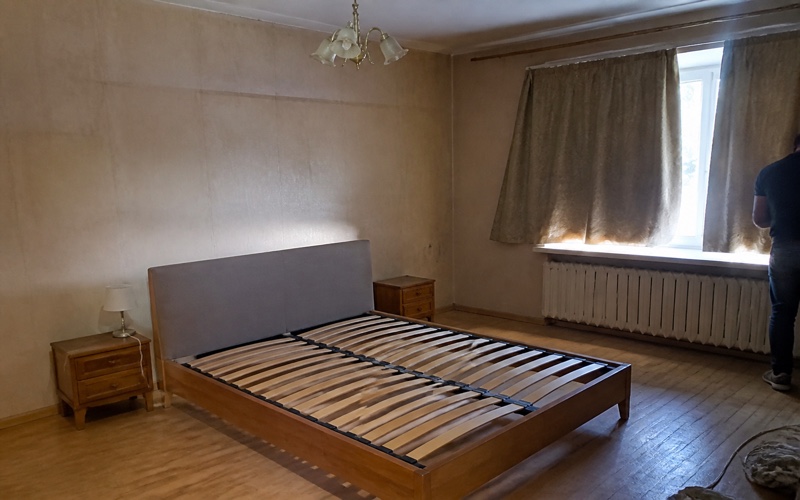
First eliminate the simpler options
Besides bedbugs, other species turn up in bedrooms:
- Carpet beetles and their larvae — hairy and elongated; they damage wool carpets and textiles but do not bite people.
- Clothes moths — if there is a wardrobe in the room. See clothes moth treatment.
- Accidental outdoor arrivals — shield bugs in autumn; larger, shield-shaped, and they do not live in beds.
- Fleas — if there is an animal in the home; they bite the legs rather than in bed. See flea treatment.
The key distinguishing feature: a bedbug is flat, oval, 4-7 mm, wingless and hairless. If the insect is hairy, has wings, or is larger than that, it is not a bedbug.
The order to check in
If you suspect bedbugs, check in this sequence: mattress seams, then the bed frame joints, then behind the headboard, then the bedside table, then the skirting boards along the bed.
Look for dark specks, blood spots and translucent shed skins. Use a torch, and look into the gaps rather than at the surfaces. For the full checklist see how to identify bedbugs.
Fifteen minutes done properly is worth more than an hour of glancing around, and it settles the question one way or the other in most flats.
What not to do
- Do not move the bed into another room and do not go and sleep at a relative's — bedbugs follow the person and colonise the new sleeping place, while the population in the old one survives. The result is a bigger problem in two places instead of one.
- Do not throw the mattress out immediately. In most cases it can be treated, chemically or with heat. And a new mattress in an untreated room will be colonised within a few weeks.
- Do not start with shop aerosols. They do not reach the eggs and they scatter the insects into other rooms, making the later professional treatment harder and more expensive.
Protecting the bedroom afterwards
The bedroom is the easiest room to protect, because the range of pests that belong there is narrow — essentially bedbugs, and less often moths or carpet beetles.
- Keep luggage out of the bedroom. Store suitcases in a hall cupboard, on a balcony or in a basement store, not under the bed. This is the single most effective habit there is.
- Keep the bed away from the wall where the layout allows, and do not let bedding touch the floor.
- Check second-hand items before they come into the room, particularly upholstered ones.
- Wash bedding at 60 °C as routine rather than at 40 °C.
- Look at the mattress seams when you change the sheets. It takes a minute and catches things early.
If the signs do not confirm it
If you find no physical evidence at all — no specks, no shells, no insects — but the bites continue, it is worth considering other causes before booking a treatment.
- Check at night with a torch. Around 3 to 5 a.m., when bedbugs are active. A daytime check misses a light infestation.
- Check the sofa if anyone regularly falls asleep on it.
- Consider fleas if the bites are below the knee.
- Consider that it may not be insects. Skin reactions have many causes, and a treatment will not help if there is nothing there.
We would rather tell you at the door that we have found nothing than treat a flat that does not need it. See insect bites compared.
One more possibility worth ruling out in a block of flats: the source may not be in your bedroom at all. If a neighbouring flat has an established infestation, bedbugs migrate along wiring channels and pipe runs and feed at night before returning. In that pattern the signs in your own bed stay minimal for a long time while the bites do not. If neighbours on your riser have had the same problem, say so in the enquiry form — it changes what we look for and where. See pests from neighbours.
Book a pest control visit
Fill in the form — we reply within 5 minutes. We work weekends and handle urgent callouts.