
Insect bites: which insect bit you
The origin of a bite can usually be narrowed down by three things: where it is on the body, how the bites are arranged, and when you notice them. This page is a comparison to help you eliminate the unlikely options.
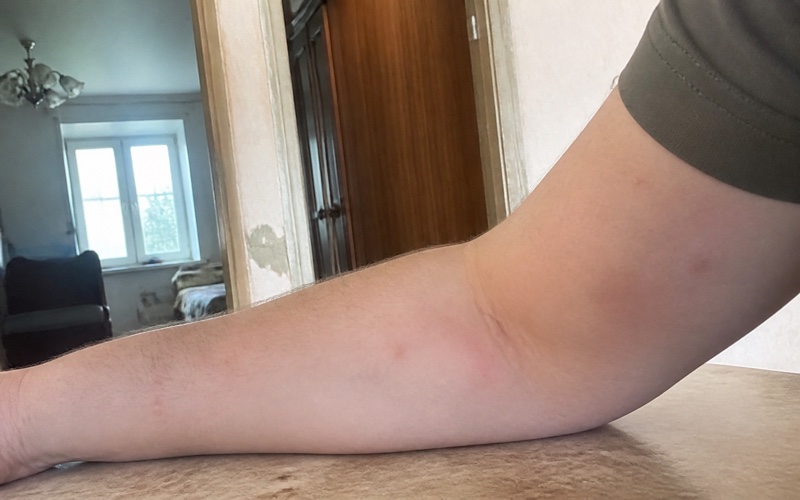
Comparison table
| Feature | Bedbugs | Fleas | Mosquitoes | Ants |
|---|---|---|---|---|
| Where on the body | Exposed skin in bed: arms, shoulders, neck | Feet, ankles | Anywhere uncovered | Wherever contact happened |
| Arrangement | Often a line or cluster | Grouped, irregular | Separate | Separate |
| When noticed | In the morning | Immediately | Immediately | Immediately, with a burning feeling |
| Regularity | Almost every morning | Repeatedly, while the population lasts | Seasonal | Rare |
| Sensation at the time | None | A slight prick | Slight | Burning |
Position is the strongest single clue
If you have to judge by one feature, make it where the bites are on the body. It is more reliable than appearance, because individual skin reactions vary enormously while the insects' access to your body does not.
- Below the knee, on the ankles. Fleas. They jump from the floor and rarely reach higher.
- Arms, shoulders, neck, face — noticed on waking. Bedbugs. These are the parts left uncovered in bed.
- Scattered anywhere uncovered, in summer, after being outdoors. Mosquitoes.
- One or two bites where you were in contact with something. Ants, or an accidental encounter.
Bites under clothing that was worn all day point away from all of these and towards something you have brought into contact with your skin.
Working through it in order
- 1
Are the bites only on the legs?
Most likely fleas, especially if there is an animal in the home. See flea bites.
- 2
Do they appear in the morning on arms and shoulders?
Check the bed; most likely bedbugs. See bedbug bites.
- 3
Do they only appear in summer and after time outdoors?
Mosquitoes. See mosquito control.
- 4
Did they appear after time in a garden or woodland?
It may be a tick — check whether one is still attached. See tick treatment.
If none of these fits, the cause may not be insects at all. Skin reactions can be caused by allergies, dry skin or other conditions. In that case it is safer to see a doctor than to book a treatment.
When bites are not an insect problem
Honestly: not every unexplained rash is an insect bite. If no physical signs of insects can be found in the property — droppings, shed skins, live insects — a treatment will not solve the problem.
Before booking, it is worth finding at least one piece of physical evidence. If there is none, start with a doctor.
This is the part of the trade that is rarely discussed, but in practice it comes up regularly. We would rather tell someone at the door that we have found nothing than take payment for treating a flat that does not have an infestation.
We are not a medical service and we do not diagnose skin conditions. This page is a rough comparison, not medical advice.
What counts as physical evidence
Before concluding that insects are the cause, look for one of these.
- Bedbugs. Dark specks in mattress seams, rust-coloured smears on the sheet, translucent shed skins along the bed frame.
- Fleas. Live fleas jumping onto white socks, or dark specks in the pet's coat that turn reddish on damp paper.
- Cockroaches. Droppings like coarse ground pepper behind the fridge, or a musty smell.
- Ants. A visible trail along a wall or worktop.
One confirmed sign is enough. You do not need to catch a live insect, and photographing whatever you find is genuinely useful — send the details in the enquiry form and it often settles the identification before anyone travels.
If you do catch something, keep it. A dead insect in a clear jar or taped to a piece of white paper is far easier to identify than any description, and it removes the guesswork entirely. Fixing an insect this small under sticky tape works better than trying to photograph it.
What does not count as evidence, on its own: an itchy patch, a sensation of crawling, or dust and fibres from a mattress. Those are common reasons people book a treatment that turns out not to be needed.
Book a pest control visit
Fill in the form — we reply within 5 minutes. We work weekends and handle urgent callouts.