
Tick treatment for grounds and gardens
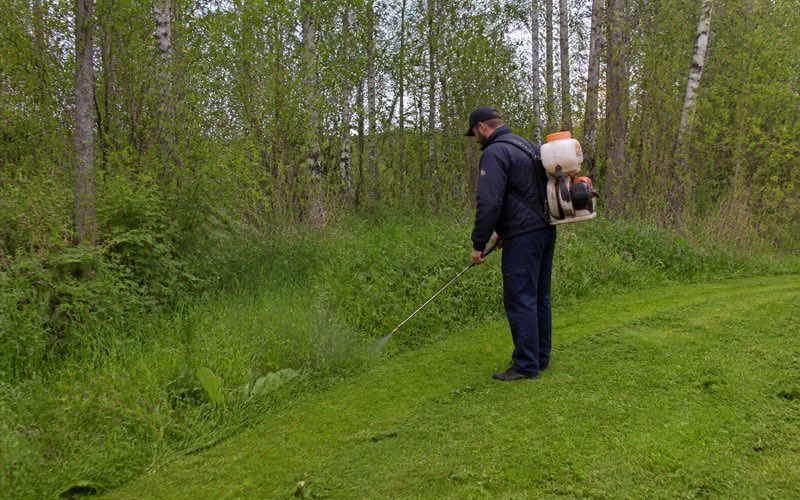
Ticks wait in long grass, at the edges of shrubs and in leaf litter for a host to pass. Treating the grounds substantially reduces their numbers exactly where people and pets spend their time.
How to spot it
Ticks found after time in the garden
Found on clothing or skin after being in the garden - a sign there is a population on the plot.
Ticks on a pet
A dog or cat regularly bringing ticks in from the garden.
Long grass and shrub edges
Ticks concentrate in the transition zone between mown lawn and overgrown areas.
Leaf litter
Ticks overwinter and shelter in damp leaf litter under shrubs.
Deer or hare tracks on the plot
Wild hosts crossing a garden reliably restock it with ticks.
What this service covers and what it does not
To be clear: this is a grounds treatment against ticks in the outdoor environment. We do not treat animals - that is veterinary work - and we do not provide medical services relating to tick bites or tick-borne disease.
If a tick has bitten someone, contact a doctor. If ticks are on an animal, you need a product recommended by your vet. Our job is to reduce the number of ticks on the plot itself.
This matters locally, because Latvia is an endemic area for tick-borne encephalitis and Lyme disease. Reducing tick numbers in a garden is a useful risk-reduction measure, but it is not a substitute for checking yourself and your children after time outdoors, or for vaccination, which is a matter for your doctor.
How the treatment is carried out
We treat the zones where ticks actually live: lawn edges, the transition to shrubs, the base of hedges, leaf litter, and shaded, damp areas. The middle of an open, regularly mown lawn is not attractive to ticks, so treatment there is normally unnecessary.
A significant additional effect comes from tidying the plot: regular mowing, clearing leaf litter, cutting back the base of shrubs and creating a buffer strip between the seating area and the overgrown part of the garden. A gravel or bark strip a metre wide between lawn and woodland edge measurably reduces how many ticks cross into the used part of a garden.
The season starts in April or May and runs to October, with two activity peaks - spring and autumn.
Where ticks are worst around Riga
The pattern is consistent: plots that back onto forest, and gardens in the pine belt towards Jurmala, Mezaparks, Baltezers and the Gauja valley, carry the highest numbers. Anywhere deer, hares or foxes cross the plot will be restocked with ticks regardless of treatment, which is why perimeter management matters as much as the spray itself.
For a garden bordering woodland, one treatment in spring and a second in late summer is the realistic pattern. For an urban garden with a fence and no wildlife traffic, one treatment often holds for the season.
What you can do yourself
- Mow regularly and keep the used areas short - this is the single most effective measure.
- Clear leaf litter in autumn, particularly under hedges and against the house.
- Create a buffer strip of gravel or bark between the garden and any woodland edge.
- Move woodpiles and long grass away from seating and play areas.
- Check yourself, children and pets after time outdoors, which remains the most reliable protection of all.
How ticks actually behave
Understanding the behaviour explains why the treatment is targeted at particular strips of ground rather than sprayed over a whole plot.
Ticks do not jump, fly or drop from trees, despite the common belief. They climb a grass stem or a low branch, usually below knee height, extend their front legs and wait - a posture called questing. They detect carbon dioxide, warmth and vibration, and attach to whatever brushes past.
They cannot survive long in dry, sunlit conditions, so they stay in humid microclimates: long grass, leaf litter, the shaded base of a hedge. This is precisely why a short, sunny lawn carries almost no ticks while the two-metre strip along the fence line can carry a great many, and why treating that strip is worth far more than treating the open lawn.
Timing the treatment through the season
Tick activity in Latvia has two clear peaks, and treatment timed to them works considerably better than treatment carried out at random.
- Spring, April to early June. The larger peak. Adults that have overwintered become active as soon as ground temperatures rise above a few degrees, which in some years means late March. A treatment in late April or early May catches this.
- Autumn, late August to October. A second, smaller peak as the new generation becomes active before overwintering. A treatment in the second half of August covers it.
Midsummer is usually the quietest part of the season, because hot dry weather suppresses questing. That is why a garden can seem clear in July and be busy again in September. See the seasonal guide.
Book a pest control visit
Fill in the form — we reply within 5 minutes. We work weekends and handle urgent callouts.