
Spider control
The spiders found in Latvia are not dangerous to people, but large numbers make a space unpleasant and - more importantly - tell you there are plenty of other insects in the building for them to feed on.
How to spot it
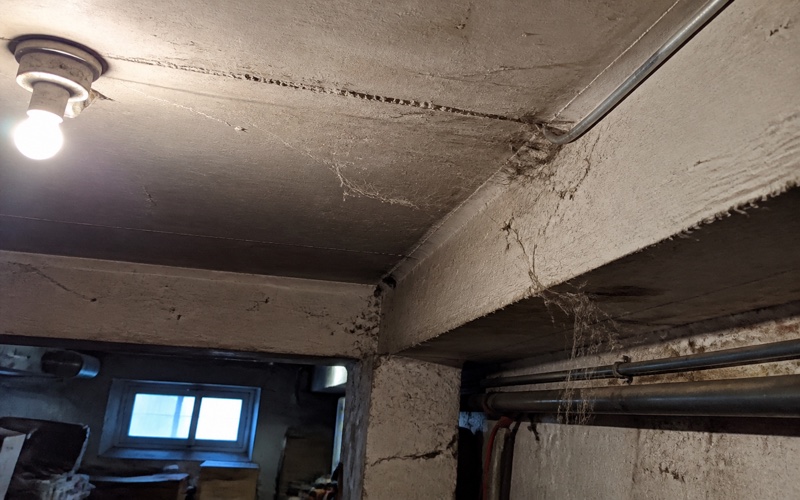
Webs in corners
In ceiling corners, behind furniture, in window reveals, in cellars and lofts.
Spiders in damp rooms
Cellars, bathrooms and utility rooms - damp attracts both the spiders and their prey.
Egg sacs
Whitish, round sacs in the webs, each containing dozens of eggs.
Plenty of flies or other insects
A large spider population almost always means a rich food supply.
Spiders indoors in autumn
Males wandering indoors in September looking for mates is normal and seasonal.
Spiders as an indicator
Spiders are predators: they settle where there is something to catch. If there are a lot of them in a room, it means there is a steady supply of flies, gnats, moths or other flying insects.
So treating only the spiders means the problem returns - the food supply is still there. The effective approach is to treat the space as a whole and work out what is attracting the other insects: damp, lighting at night, accumulated organic matter, or unsealed ventilation openings.
This is worth taking seriously rather than treating as a nuisance. A sudden increase in spiders in a cellar or a stairwell is often the first visible symptom of a fly or gnat problem elsewhere in the building.
How the treatment is carried out
First the webs and egg sacs are removed mechanically - without that step the treatment is incomplete, because a new generation hatches out of the sacs.
Then we carry out a residual treatment where spiders move: ceiling corners, window reveals, skirting boards, the perimeter of cellars and lofts, and around doorways and ventilation openings.
In houses an external perimeter treatment is worth adding, since spiders come in from outside through gaps in the foundation and around doors. See cellars and houses.
Which spiders you actually see in Riga
Three groups account for nearly everything people find indoors here. House spiders build the tangled webs in ceiling corners and behind furniture, and are the ones most often noticed. Cellar spiders, with very long thin legs, hang under ceilings in damp rooms and basements. Wandering spiders - males looking for a mate in late summer and autumn - are the ones that appear suddenly in the middle of a floor, which is when most people call.
None of them is medically significant. A bite is possible but rare, and produces nothing worse than a minor local reaction. The reason to treat is comfort and the underlying insect problem, not danger.
Keeping them out
- Deal with the food supply first. Fewer flies and gnats means fewer spiders, reliably.
- Reduce outside lighting near doors and windows at night, or switch to warmer-toned bulbs that attract fewer insects.
- Seal gaps around doors, foundation cracks and ventilation openings.
- Clear webs regularly in cellars, lofts and stairwells - it removes egg sacs before they hatch.
- Keep firewood and clutter away from the walls, since both are ideal shelter.
Spiders in cellars and lofts
These two spaces account for most heavy spider populations in Riga buildings, and for slightly different reasons.
A cellar combines damp, darkness and a steady supply of insects coming in around pipe runs and through air bricks. In shared basements of blocks of flats there is also often stored clutter, which multiplies the harbourage available. Treating a cellar effectively means clearing the webs, treating the perimeter and pipe penetrations, and, where possible, reducing the damp.
A loft is drier but attracts flying insects through gaps in the soffits and around the ridge, particularly at night if there is lighting below. Cluster flies overwintering in a loft are a common food source that sustains a large spider population through the winter, which is why the two problems often turn up together.
How long the treatment holds
A residual treatment on interior surfaces typically stays effective for several weeks to a few months, depending on the surface and how often it is cleaned. Spiders are not affected by residual products as reliably as most insects, because they walk on the tips of their legs and pick up less of the deposit - which is why mechanical web removal is not an optional extra but half the job.
In practice a house with a controlled insect population stays comfortable for a season after one treatment. A cellar with standing damp and a constant supply of flies will need repeating, and in that case we would rather talk about the damp and the flies than sell you a repeat spider treatment every three months.
Book a pest control visit
Fill in the form — we reply within 5 minutes. We work weekends and handle urgent callouts.