
Insects in the kitchen: what they are and what to do
The kitchen is where insect problems arise most often: warmth, moisture and a constant food supply. The good news is that where in the kitchen you find them tells you fairly precisely what you are dealing with.
What lives where
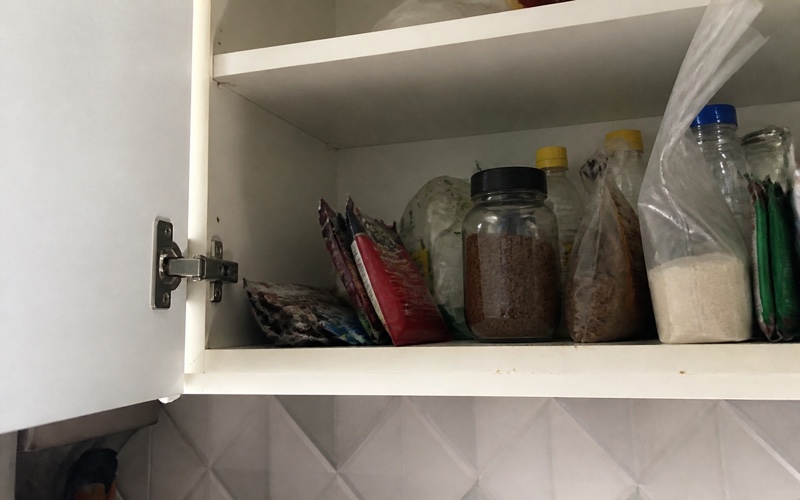
- In the food cupboard, in grains and flour — pantry moths (webbing and larvae) or stored product beetles.
- Around the fruit bowl, the food waste caddy, wine bottles — fruit flies.
- Around the sink and drain — drain flies, see gnats in the flat.
- Behind the fridge, under the cooker, on the floor at night — cockroaches.
- In a trail along the wall, around sweet things — ants.
- Flying near the ceiling in the evening — pantry moths.
What to throw out and what you can keep
The most common mistake is throwing out all the food in a panic. That is usually unnecessary.
- Throw out: anything with visible larvae, webbing, clumped grains or insects in it; and anything in damaged packaging in the infested cupboard.
- You can keep: products stored in airtight glass or thick plastic containers; unopened tins and bottles; and products from other, uninfested cupboards after checking.
Once the problem is resolved, move loose dry goods into airtight containers. Larvae chew through film and cardboard, but not through glass or thick plastic.
How to check the products
If insects have appeared in the kitchen, checking the food is the first and most important step — without it any treatment gives only a short-lived result.
- 1
Take everything out of the cupboard.
All of it, including the packet at the back that has been there two years. That is usually the one.
- 2
Check each packet against the light.
Webbing in flour or grains is the clearest sign of moths.
- 3
Do not forget the unusual items:
birdseed, dried mushrooms, pet food, spices, tea, decorative dried arrangements. These are frequent sources people never think of.
- 4
Wipe the empty cupboard
, paying attention to the corners and the underside of the shelves, where eggs are laid.
One infested packet is enough to reinfest a whole kitchen, which is why a partial check tends to produce a recurrence a month later.
Why treatment without finding the source does not work
In a kitchen there is almost always a specific source: an infested product, biofilm in the drain trap, an accumulation of organic matter under an appliance, or a nest outside the building.
If that is not removed, any treatment gives a result for a few days only. This is why our work in a kitchen always begins with looking for the source rather than with spraying.
The other reason is that a kitchen has food preparation surfaces, so broad spraying is not acceptable. We use targeted methods: gel baits in gaps and behind appliances, where nothing comes into contact with food.
An added benefit is practical: you do not need to empty the cupboards and you do not need to leave the flat.
Preventing insects coming back
The kitchen is the room where prevention has the biggest effect, because almost every species found there depends on available food and moisture.
- Airtight containers for flour, grains, cereal, pet food and birdseed.
- Check new packets before they go into the cupboard. Pantry moths are usually brought in with the shopping rather than flying in.
- Dry the sink at night and fix dripping taps.
- Clean the drain trap every few months if you have had drain flies.
- Empty the food waste caddy daily in summer.
One thing worth being realistic about in a block of flats: cockroaches and ants are not always a kitchen hygiene question at all. They move between flats through the ventilation and pipe shafts, and a spotless kitchen on a riser with an infested flat below will still see them. Sealing the pipe runs and checking the ventilation grilles matters more in that case than anything you do with the food. See pests from neighbours.
The same is true of fruit flies in summer, which arrive through an open window with no screen. Prevention there is a matter of window screens and covered fruit rather than of treatment.
Book a pest control visit
Fill in the form — we reply within 5 minutes. We work weekends and handle urgent callouts.