
Bedbugs after travelling
Travel is the main route by which bedbugs spread around the world. They get into luggage in a hotel room and are carried home, often unnoticed for several weeks until the first bites appear.
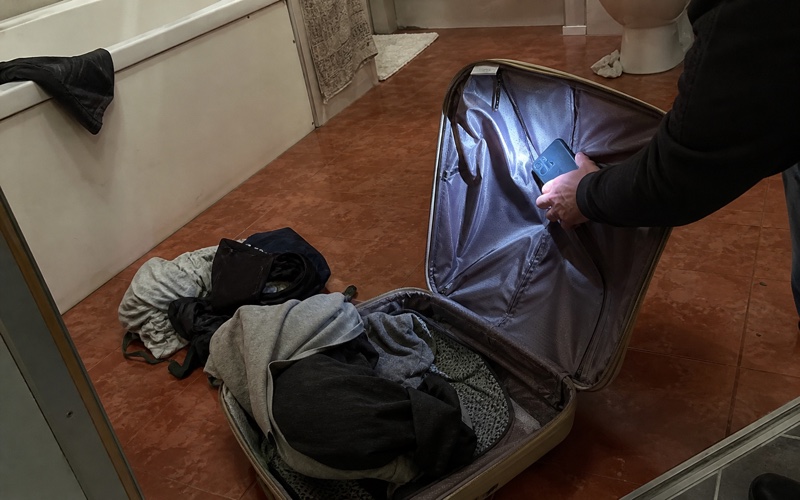
What to do as soon as you get home
If you suspect the place you stayed had bedbugs, act before the luggage reaches the bedroom:
- 1
Do not open the suitcase in the bedroom.
Best done on a hard floor — the bathroom, the hallway, a balcony or the stairwell.
- 2
All textiles straight into a 60 °C wash
— including things you never wore. If the fabric will not take it, use a tumble dryer on high heat for at least 30 minutes.
- 3
Vacuum the suitcase thoroughly
, especially the seams, the frame gaps, the pockets and around the zips. Put the bag straight into a bin outside the flat.
- 4
Store the suitcase outside the bedroom
— in a basement, garage or on a balcony, not under the bed or in a wardrobe.
How to check a hotel room while you are away
The check takes two minutes and is the only real way to avoid the problem in the first place:
- Put your luggage in the bathroom or on the luggage rack, not on the bed or the floor, until you have checked.
- Fold back the sheet and inspect the mattress seams at the head end — that is where bedbugs concentrate.
- Check the bed frame joints and, if you can, look behind the headboard.
- Look for dark specks, blood spots and shed skins.
If you find signs, ask for a different room on a different floor, not the one next door: bedbugs move through wall cavities, so an adjacent room is often part of the same infestation.
How to travel so you bring nothing back
Complete certainty is not possible, but the risk can be cut close to zero with a few habits.
- Never put luggage on the bed. Not for a moment, not while unpacking. This one habit does more than everything else combined.
- Use the luggage rack, away from the wall, or the bathroom, which is the least likely room in a hotel to hold bedbugs.
- Keep the suitcase zipped shut when you are not actively using it.
- Use light-coloured luggage lining if you have the choice — signs show up on it.
- Pack dirty laundry in a sealed bag so it can go straight into the machine on arrival.
None of this depends on the price of the accommodation. Bedbugs are as common in expensive hotels as in cheap ones, because the vector is other guests, not the standard of cleaning.
What to do about the suitcase long term
The suitcase is the item most likely to become a hidden reservoir, precisely because it is usually stored in the bedroom — under the bed or in a wardrobe.
- Store it outside the bedroom. A basement store, a garage or a balcony.
- Or seal it in a large plastic bag if it has to stay indoors.
- Vacuum it after every trip, not only after a suspicious one.
- Heat treat it if you know it has been exposed — a suitcase inside a heat tent is a straightforward job and cheaper than replacing it. See heat treatment.
When the problem is already in the flat
Bedbugs brought back from a trip are usually noticed 2-6 weeks later, once the population has grown enough to produce regular bites.
At that stage DIY rarely succeeds: the colony has already spread into the bed structure and the adjacent furniture. See bedbug treatment and how to identify bedbugs.
Do not put it off. A single fertilised female produces hundreds of descendants within a few months, and the longer you wait the larger and more expensive the treatment becomes.
A treatment in a flat starts from €55 for one room, and we reply to enquiries within 5 minutes, weekends included.
One thing worth knowing if you live in a block of flats in Riga: an infestation brought in from a trip does not stay in your flat indefinitely. Bedbugs migrate along wiring channels and pipe runs, and a problem ignored for a few months becomes a problem for the whole riser. Dealing with it early is cheaper for you and avoids the far more awkward conversation with neighbours later.
Book a pest control visit
Fill in the form — we reply within 5 minutes. We work weekends and handle urgent callouts.