
Pest control in a hotel or hostel
In a hotel, a pest problem is first of all a reputation problem. One review mentioning bedbugs on a booking site affects occupancy for far longer than the infestation itself lasts, which is why speed and discretion matter as much as the treatment.
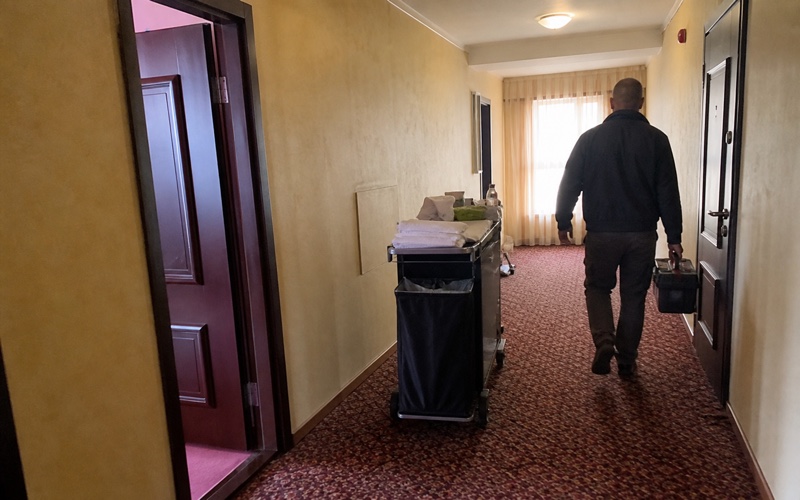
Why hotels are especially exposed
A hotel has a constant flow of people and luggage from many countries, and that is the main way bedbugs travel worldwide. An infestation says nothing about hygiene standards; it is a statistical inevitability in any property with high turnover.
The second risk factor is that bedbugs spread between adjacent rooms through wall voids and service ducts. So by the time one guest complains, the problem is often already wider than that room.
The standard approach is to treat the room in question and inspect the neighbouring rooms — including those directly above and below, not just along the corridor.
Heat treatment returns rooms to sale faster
For a hotel the critical question is how long a room cannot be sold. Heat treatment works well here: once the room has cooled it is immediately usable, because there are no chemical residues and no long airing period.
Individual items — mattresses, soft furniture, guest luggage — can be treated inside a heat chamber without interrupting the rest of the floor. That also saves items that would otherwise have to be thrown away.
What to do when a guest reports bites
- 1
Do not move the guest to the room next door.
Move them further away, ideally to another floor, so the problem is not carried across.
- 2
Bag the bedding.
Seal it in plastic before it travels through the building to the laundry.
- 3
Leave the room as it is.
Do not spray anything from a shop; repellent products scatter the population deeper into the structure.
- 4
Note the room numbers.
The one reported, plus those either side, above and below — that is the inspection scope.
- 5
Get it inspected quickly.
Bedbugs found within days are a room-level job; found in a month they are a floor-level job.
Discretion and long-term risk
We work without branded vehicles and without lettering on clothing, and we plan the visit for the time of day with the least guest traffic.
Bringing bedbugs into a hotel cannot be prevented entirely — it is an unavoidable feature of high turnover. What can be changed is how early they are found. Regular inspection of rooms with monitoring is the only realistic way to catch an infestation before a guest does, and that is the only version of this problem with no reputational cost attached.
We quote hotel work after a survey, because the number of rooms, the risk level and the working hours vary too much for a single figure.
How wide the inspection needs to be
The most common mistake in a hotel is treating exactly the room that was reported and nothing else.
Bedbugs spread along the paths of least resistance: through wall voids, along service ducts and on housekeeping trolleys and laundry. That means the rooms either side, the rooms directly above and below, and any room the affected guest was moved into are all part of the picture.
Inspecting them costs very little and takes an experienced person minutes per room. Not inspecting them is how a single-room problem becomes a floor-wide problem over a season, at which point the cost is measured in room-nights rather than in treatment fees.
We would rather inspect eight rooms and treat one than treat one and return three times.
Preparing a room for treatment
Housekeeping can do most of this, and it makes a measurable difference to the result.
- 1
Strip and bag the linen
in the room itself, before it is carried into the corridor.
- 2
Empty the wardrobe and drawers,
bagging the contents rather than moving them to another room.
- 3
Pull the bed away from the wall
and give access to the frame, the headboard and both sides of the mattress.
- 4
Clear the floor
along the skirting boards and behind the bedside units.
- 5
Leave the room otherwise as it is.
Do not vacuum aggressively before an inspection, because the evidence is what tells us how far it has spread.
For a heat treatment the list is different: furniture and textiles stay, but heat-sensitive items come out, including electronics, aerosols and anything in the minibar.
Book a pest control visit
Fill in the form — we reply within 5 minutes. We work weekends and handle urgent callouts.