
Pest control in a restaurant or cafe
In food businesses pest control is not a comfort issue. It is part of the food safety system, and its absence is a direct risk both at inspection and to your reputation.
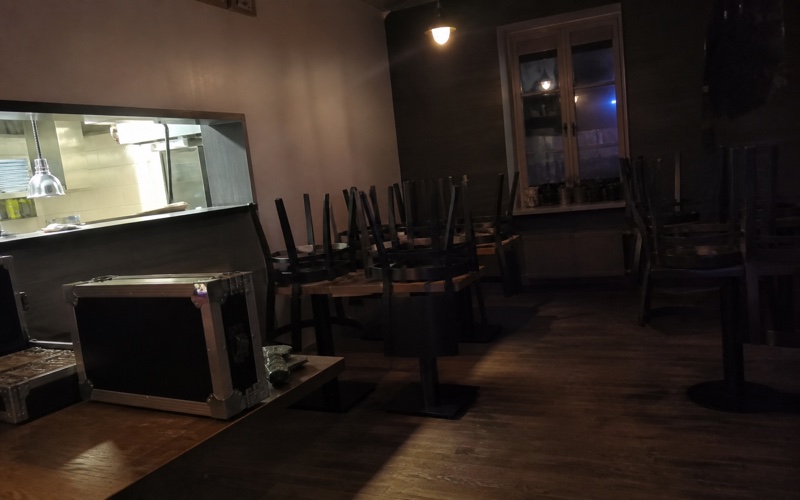
Treatment outside opening hours
In a restaurant the treatment is carried out after closing — at night or early in the morning. Service is not interrupted and guests never see it happen.
Before we start in the kitchen, food and equipment zones are covered or cleared. Afterwards, work surfaces are cleaned down as the food hygiene requirements demand.
Where the problems are in a kitchen
A commercial kitchen is close to ideal for insects: heat, moisture, constant food and a great many narrow gaps.
The critical spots are behind and under the range and the oven, inside the extraction hood and its filters, behind fridges and freezers, under worktops and sinks, in floor drains and grease traps, in the bin area, and at goods-in, where insects arrive with deliveries.
The usual species are cockroaches and flies, with pantry moths in the dry store.
What to prepare before we arrive
- Clear the surfaces. Food, utensils and small equipment off the worktops and into sealed storage.
- Open up access. Pull out the range, fridges and freezers where possible — the gaps behind them are where the colony lives.
- Empty the bins. And clean the bin area itself, not just the containers.
- Flag the sensitive zones. Tell us where open product or packaging cannot be moved so we can plan around it.
Preparation is what decides whether the product reaches the harbourage. A kitchen treated around fully loaded shelving leaves untreated pockets, and the population rebuilds from them.
Why regularity beats a stronger treatment
In a restaurant an insect problem is rarely a one-off event. Constant deliveries, heat, moisture and continuous food presence mean the risk is permanent rather than episodic.
So an approach based on reacting — treating when somebody spots a cockroach — costs more in practice than planned prevention. Every emergency call-out is more expensive than a scheduled visit, and between call-outs the population rebuilds.
With regular servicing, monitoring points show the trend: where and when activity rises. That lets you act before an insect ends up in a guest’s sightline or in an inspection report, and it means there is documentation to show when the inspection comes.
For commercial premises we quote after a survey. Floor area, the number of zones, the risk level, night working and the amount of documentation vary too much for a single published price.
Documentation and what inspections look for
For a food business what matters is not only the treatment but evidence that pest control happens systematically. For sites on regular servicing we prepare records of the work carried out and the monitoring data, which can be produced when asked.
What that record shows in practice is a plan of monitoring points, dated inspection entries, what was found on each visit and what was done about it. A folder containing three invoices from three separate emergencies is not the same thing, and it reads very differently to an inspector.
Regular scheduled treatment is also simply more effective than reacting — see preventive treatment. It stops the situation where the person who spots the cockroach is a guest with a phone camera.
How to avoid a repeat problem
Most restaurants that keep having the same problem have a structural cause nobody has dealt with, not a treatment that failed.
- Check deliveries at the door. Cardboard and pallets are the main import route; break cardboard down and remove it the same day.
- Clean under and behind equipment, not just around it. Grease and crumbs under the range are the food supply that keeps a population alive.
- Deal with the drains. Floor drains and grease traps breed drain flies continuously, and surface cleaning does nothing to them.
- Seal the gaps. Around pipe entries, behind splashbacks and where equipment meets the wall.
- Keep the bin area clean, not merely emptied, and keep it away from the kitchen door.
- Fix the damp. Leaking taps and standing water under sinks support cockroaches indefinitely.
Book a pest control visit
Fill in the form — we reply within 5 minutes. We work weekends and handle urgent callouts.