
Cockroach control in a restaurant kitchen
In a restaurant kitchen cockroaches are a hygiene, legal and reputational problem at the same time. Treatment has to be effective and carried out so that it neither compromises food safety nor causes downtime.
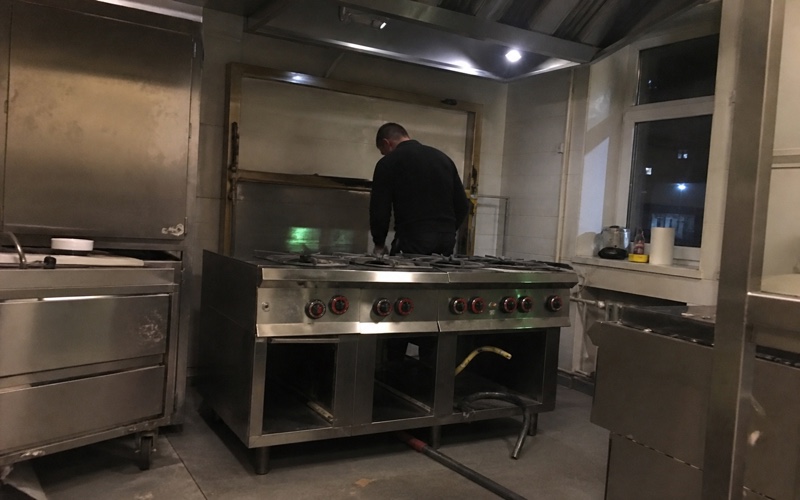
Why a restaurant kitchen is the hardest property
A kitchen combines everything cockroaches need at once: constant heat from equipment, moisture, uninterrupted food and a very large number of narrow gaps to hide in.
On top of that a kitchen runs almost around the clock, so the treatment window is narrow and some standard methods cannot be used there at all.
The critical areas
When treating a restaurant we concentrate on the places daily cleaning never reaches: inside the extraction hood and its filters, behind and under the range, oven and fryer, the motor compartments and drip trays of fridges and freezers, under worktops and sinks, drainage gullies, the waste area, and goods-in where insects arrive with deliveries.
Goods-in matters especially: most cockroaches enter a restaurant in cardboard packaging from suppliers.
How treatment avoids contact with food
We work after closing — at night or early morning. Before treatment, food, equipment and work surfaces are covered or removed; afterwards work surfaces are cleaned to the required standard.
In food-preparation areas we use only products permitted there, applied in targeted spots — gel baits in gaps and behind equipment — rather than spraying across the room.
What to do between treatments
In a restaurant, daily practice between visits affects the outcome more than the treatment itself, because the risk of re-introduction is constant.
- Unpack and dispose of cardboard immediately — do not store it. It is the main entry route.
- Clean under and behind equipment daily, not just the surfaces.
- Clean extraction filters regularly.
- Keep drainage gullies clear — a frequent breeding site for flies and gnats.
- Leave no standing water in sinks or on floors overnight.
- Keep the waste area closed and as far from the kitchen entrance as possible.
Documentation and why regularity beats strength
In food premises what counts at an inspection is not only the absence of insects but evidence that pest control is systematic and documented.
For regularly serviced properties we maintain a monitoring point plan, an inspection record and documentation of the work carried out, which can be produced at an inspection.
An approach based on reacting — treating when someone spots a cockroach — costs more in practice than regular prevention. Every emergency callout is dearer than a planned visit, and between callouts the population rebuilds. See preventive treatment.
Book: cockroach control in a restaurant kitchen
Fill in the form — we reply within 5 minutes and quote a price before any work starts.