
Pest control in garages and outbuildings
Garages and outbuildings are unheated, rarely visited and full of stored belongings. That combination is highly attractive to insects and stays unnoticed by people for a long time.
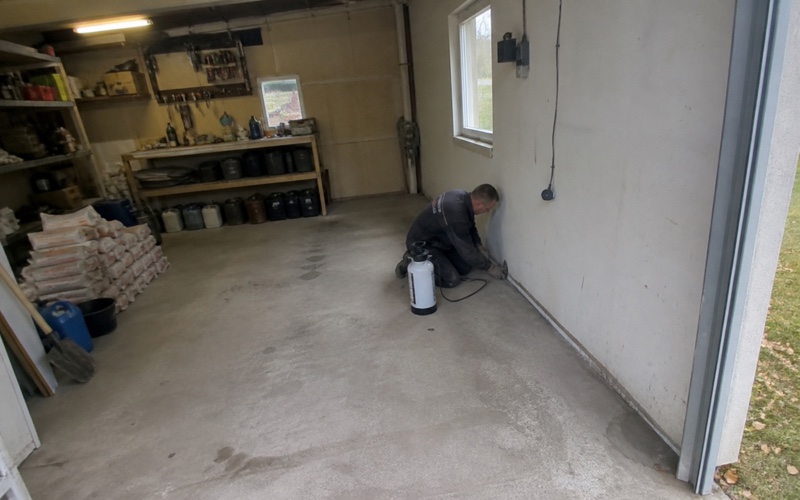
What makes these spaces different
Unlike living rooms, a garage or shed almost always holds a large amount of stored material — cardboard, timber, textiles — along with more gaps and unsealed openings than any occupied room.
The usual occupants are spiders in corners and near the ceiling, wasps nesting under the roof, earwigs in the damp spots, and various beetles in timber.
How the treatment is carried out
We treat the perimeter of the space, the corners, the ceiling zone, gaps and the entry points — door reveals, ventilation openings, gaps in the foundations.
If the space is full of stored items, we agree beforehand what needs clearing or covering. A large part of the effect also comes from simple tidying: replacing cardboard boxes with plastic containers, moving firewood away from the wall, and dealing with the damp.
When treatment is needed and when it is not
We would rather say this plainly than sell an unnecessary visit. A few spiders in a garage are not a pest problem; they are normal, and they eat other insects. Clearing the webs and reducing clutter is usually enough.
Treatment is warranted when there is a wasp nest anywhere people pass, when beetle activity in timber suggests structural damage, when there is a heavy recurring infestation each season, or when the garage adjoins living space and insects are moving through.
Prevention: damp and clutter
- Cut the damp. Ventilate, fix leaks, and keep the floor dry.
- Store in sealed plastic rather than cardboard, which is both shelter and food.
- Move firewood off the wall and raise it off the ground.
- Seal gaps around door frames, service entries and ventilation openings.
- Clear webs and corners a couple of times a year rather than once a decade.
The price depends on the size of the space and the scope of work; we confirm it after the survey. See prices.
How the price is set
Garage and outbuilding work is priced by scope rather than by a fixed rate, because the range is wide: a single wasp nest under a roof and a full treatment of a cluttered double garage with a damp problem are not comparable jobs.
A wasp nest is from €60. A general treatment of a garage or outbuilding is quoted once we know the floor area, how much is stored in it and whether the perimeter is included. Where the garage is attached to a house and is being treated as part of the house, it is usually folded into that job — house treatment starts from €120.
See the prices page for the full list. In the enquiry, tell us the approximate size, what is stored and whether the space is heated; that is normally enough for a realistic figure before we visit.
Wasp nests in outbuildings
This is the single most common reason we are called to a garage or shed, and timing changes the job considerably.
A nest started in spring is the size of a golf ball with a handful of insects, and dealing with it is quick. By August the same nest can hold thousands of wasps and the colony is defensive, which makes removal both harder and genuinely hazardous to attempt yourself.
Typical locations are under the roof fascia, inside the roof void, behind cladding boards and in unused corners near the ceiling. The signs are a steady traffic of wasps to one point on the building, and papery material appearing on surfaces below.
Do not block the entrance. A sealed colony chews an alternative route, frequently into the space next door, which is how a shed problem becomes a house problem. Wasp nest removal is from €60 — see wasp nest removal.
What to do with what is stored there
Garages, sheds and storage rooms are difficult less because of the building than because of what accumulates in them. Preparation therefore does more work here than in most properties.
- Cardboard is the main problem. Boxes stored for years are simultaneously harbourage, food and breeding material — for cockroaches, silverfish and beetles alike. Where it is possible, moving to plastic boxes with lids removes the harbourage permanently, and it is the single change that most reduces recurrence.
- Textiles in storage. Winter clothing, blankets and fabric stored in a garage are the classic case of damage found only months later. Before treatment they should be taken out; afterwards they belong in sealed containers. See clothes moth treatment.
- Firewood. A log pile inside or against the wall brings in beetles and woodworm with the timber itself. Keeping it away from the wall and off the ground is worth more than any treatment. See woodworm treatment.
- What must be moved out before we start: open paint and solvents, garden chemicals, pet food, and anything edible. These are moved for the duration and returned once the space has been aired.
Clearing the perimeter matters most of all: floor edges and skirting are where the product goes, so a metre of clear floor along the walls does more for the result than anything else you can do in advance.
Book a pest control visit
Fill in the form — we reply within 5 minutes. We work weekends and handle urgent callouts.