
What pest control is
Pest control is the elimination of insects and related arthropods in buildings and on land, using professional products and methods. In Latvia the term dezinsekcija is often confused with neighbouring services, so it is worth being precise about what it does and does not cover.
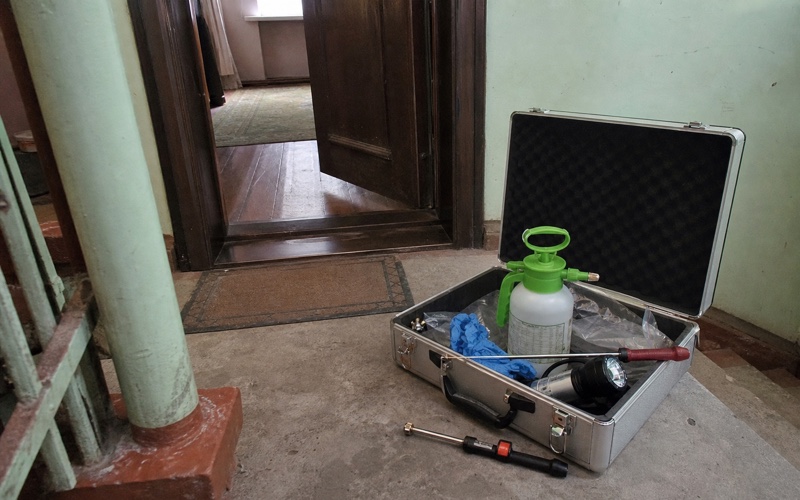
The definition
The Latvian word dezinsekcija is built from dez- (removal) and the Latin insectum (insect). It means the set of measures used to reduce or eliminate an insect population — adults, larvae and eggs alike.
In practice it involves identifying the species, finding the harbourage, choosing a suitable method, carrying out the treatment, and advising on how to stop it happening again. The identification and the harbourage search are the parts that decide whether the rest works.
If you are searching in Latvian, dezinsekcija is the word you will see on most local sites. It is the direct equivalent of what English-speaking countries call insect pest control.
What pest control deals with
The subject of pest control is insects and closely related arthropods:
- bedbugs and bed bugs in the bed,
- cockroaches,
- fleas, ants, clothes moths and pantry moths,
- flies, gnats, mosquitoes,
- wasps and hornets,
- spiders, silverfish, beetles, woodworm, ticks and earwigs.
The full list is on the pests we deal with page.
What we do not do
We provide insect pest control only.
We do not carry out rodent control, and we do not carry out treatment of premises against micro-organisms. Those are different services with different methods, different products and different specialisms, and we do not offer them.
If your problem is insects, we will deal with it. If it is something else, it is more honest to say so straight away than to take on work we do not specialise in.
The terminology is worth knowing if you are searching in Latvian, because the three words look similar and get mixed up: dezinsekcija is insects, deratizacija is rodents, dezinfekcija is micro-organisms. We do the first one.
This specialism is a deliberate choice. Concentrating on insects alone is what makes it possible to know their biology, behaviour and the right method for each species in real depth rather than superficially.
Methods
Depending on the species, the property and the situation we use chemical treatment with residual action, heat treatment, gel baits or ULV fogging.
Choosing the method is not a formality. It decides whether the treatment eliminates the colony or only the insects you can see. Spraying a cockroach infestation that needed gel bait produces a scattered colony rather than a dead one. See all methods.
What a typical visit actually looks like
So the picture is concrete, this is what happens on a standard flat callout.
- 1
Identification.
We look at what you have found and at the property itself. Species determines method, so this is not a formality.
- 2
Finding the harbourage.
Mattress seams and bed frame for bedbugs; behind the fridge and under the sink for cockroaches; the affected cupboard for moths. This is where most of the time goes.
- 3
The treatment.
Targeted application into gaps, along skirting boards, behind and under furniture. In a one-bedroom flat, typically 45-90 minutes.
- 4
Instructions.
How long to stay out, what you may wash, what to expect, and whether a second visit is planned.
Prices start at €55 for a one-room flat, €60 for two rooms and €65 for three; a house starts from €120 and a repeat treatment from €60. Commercial premises are quoted after a survey. See prices.
How pest control has changed
The idea of pest control as fogging a room with poison is at least two decades out of date, but it persists — and it shapes what people expect when they book.
What has actually changed: targeted placement replaced blanket spraying; gel baits replaced spraying for cockroaches entirely, which is why you no longer need to empty the kitchen or leave the flat; microencapsulation gave products weeks of residual action instead of hours; and heat treatment made a genuinely chemical-free option available for bedbugs.
The practical consequence for a customer is that a modern treatment is less disruptive than the version they are picturing. Most flat jobs mean a few hours out and a wipe-down, not a decontamination.
The other thing that has changed is what a competent job looks like from the outside. Twenty years ago the visible work was the spraying. Today most of the value is in the half hour before it: working out which species you actually have, and finding where it lives. A technician who arrives, sprays and leaves inside fifteen minutes without looking at the mattress seams or behind the fridge has skipped the part that decides the result.
That is also a reasonable thing to judge a provider by. Being asked detailed questions about where and when you see the insects, and having someone actually pull the bed out, is a better sign than a confident promise made on the phone before anyone has seen the property.
Book a pest control visit
Fill in the form — we reply within 5 minutes. We work weekends and handle urgent callouts.